STORM GRCOperational advantage
Twelve connected modules sharing the same asset, control and risk model.
Risk & complianceAudit & incidentsSuppliers & BCPPolicies & threat intel
STORM connects compliance to the operational work around it: assets, risk, audits, incidents, suppliers, continuity, policies, tasks, phishing and threat intelligence. Drata describes an agentic trust management platform spanning continuous compliance, enterprise GRC, integrated risk and customer assurance. Compare the published approaches and see where STORM provides the more explicit operational model.
Source-backed comparison · Drata information links to Drata's official website and help center · Reviewed 30 September 2026
Twelve connected modules sharing the same asset, control and risk model.
Continuous compliance, enterprise GRC, integrated risk and customer assurance.
STORM is designed for teams that want framework work, operational risk, resilience and security governance to run on the same underlying model—not in separate trackers.
Assets, controls and risks are shared across compliance, audit, supplier, continuity and incident workflows, reducing re-entry between modules.
Platform architectureCartography, business impact, threat and vulnerability assessment feed the risk register, treatment plans and compliance monitoring.
Five-phase methodologyDedicated BCP/DRP and incident modules connect recovery planning and response activity with risk, governance and corrective actions.
Operational resilienceSTORM publishes shore, fleet and per-vessel workflows mapped to IMO MSC.428(98) and IACS UR E26/E27.
Sector-specific scopeThis focused comparison avoids raw feature counts and highlights areas where STORM's published scope is more operationally explicit—from asset cartography and resilience to threat context and fleet workflows.
This is a focused view of STORM's published differentiators, not a complete feature inventory. It does not imply that an unlisted Drata capability is unavailable; validate requirements in current demonstrations and contracts.
The value proposition is the path between modules: one set of assets, risks and controls moving through assessment, treatment, resilience, response and governance.
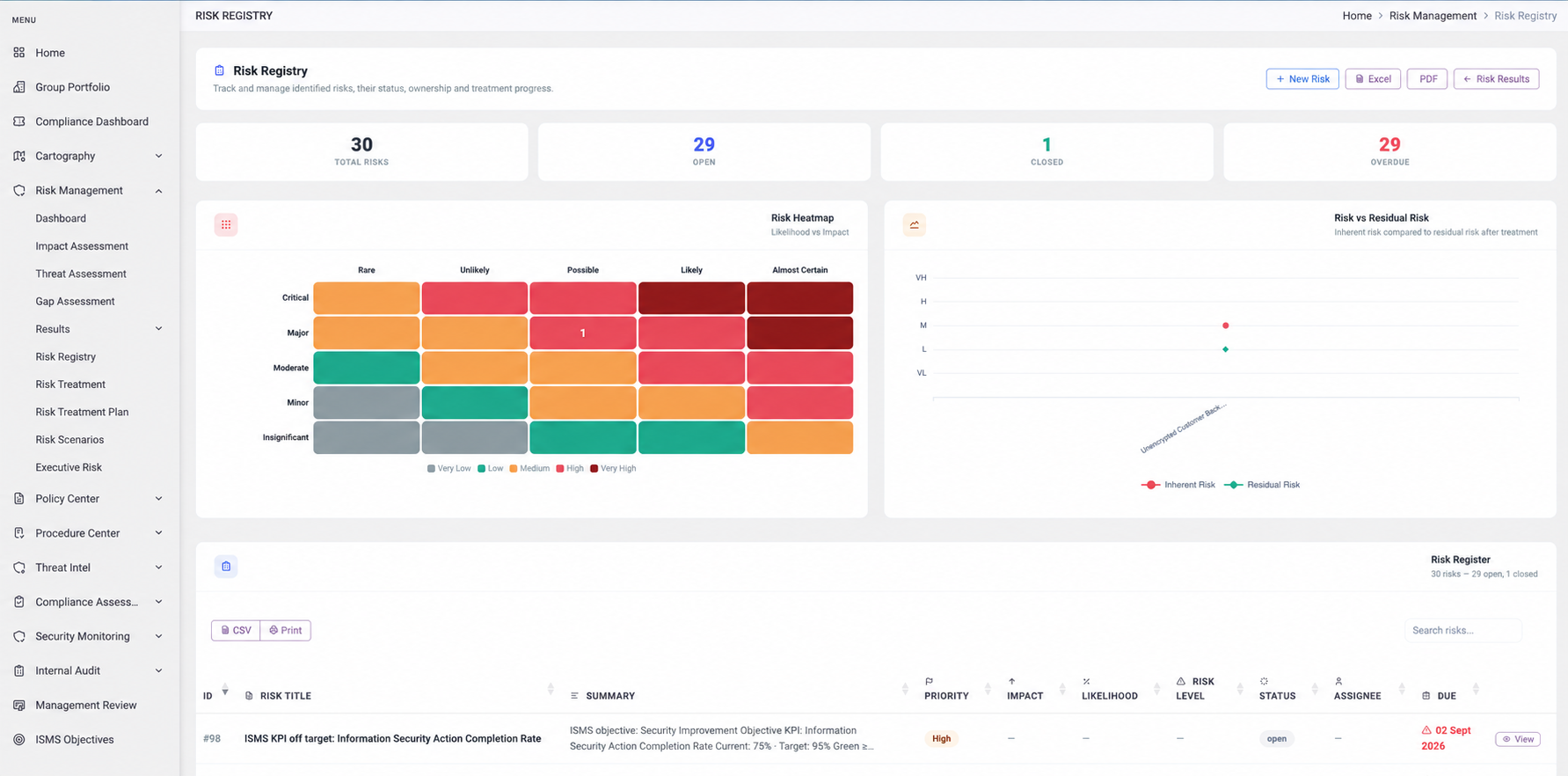
STORM ties impact and threat assessment to risk scenarios, treatments and residual risk, so framework activity stays connected to the underlying exposure.
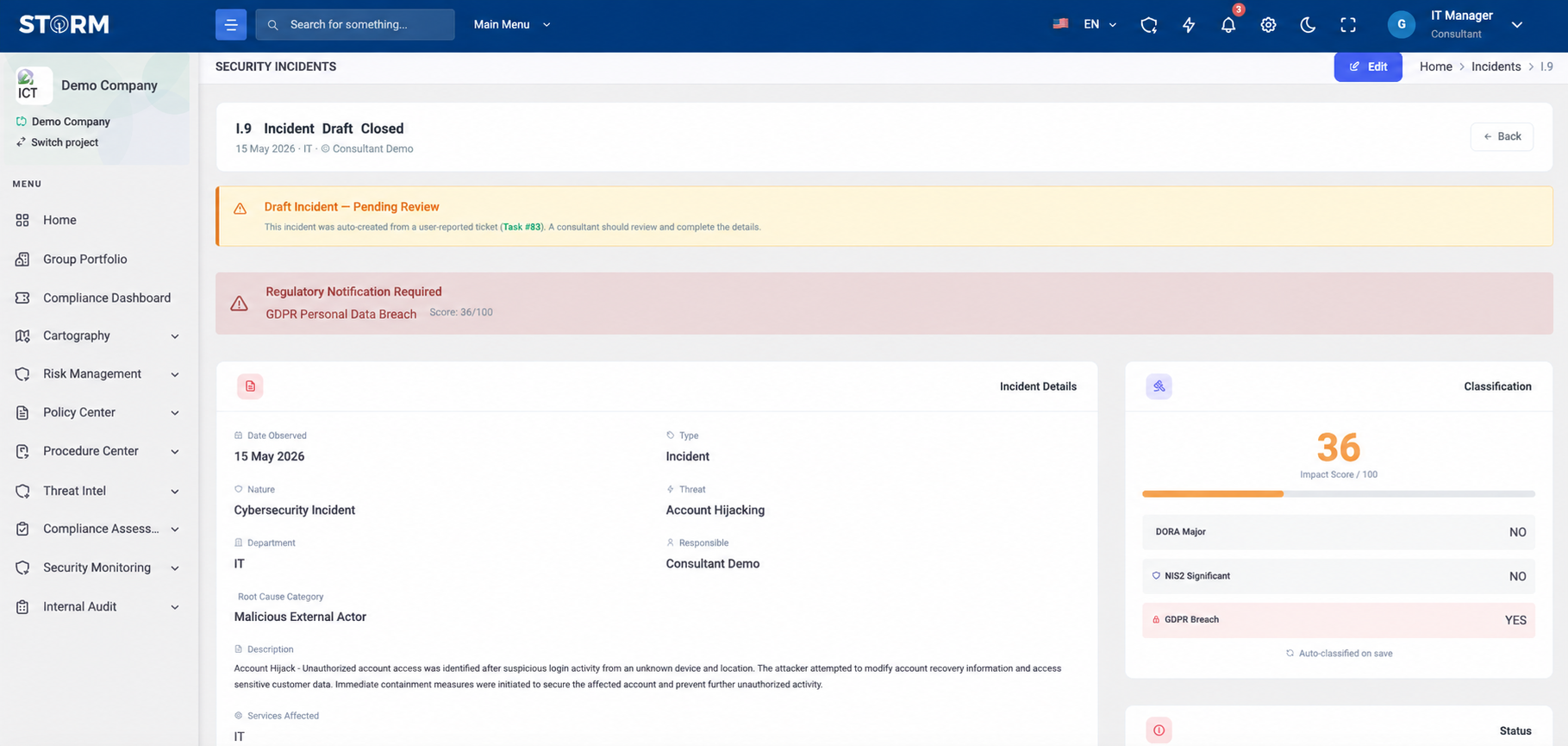
STORM brings Business Impact Analysis, RTO/RPO targets and recovery plans into the same environment as incident reporting, response and corrective actions.
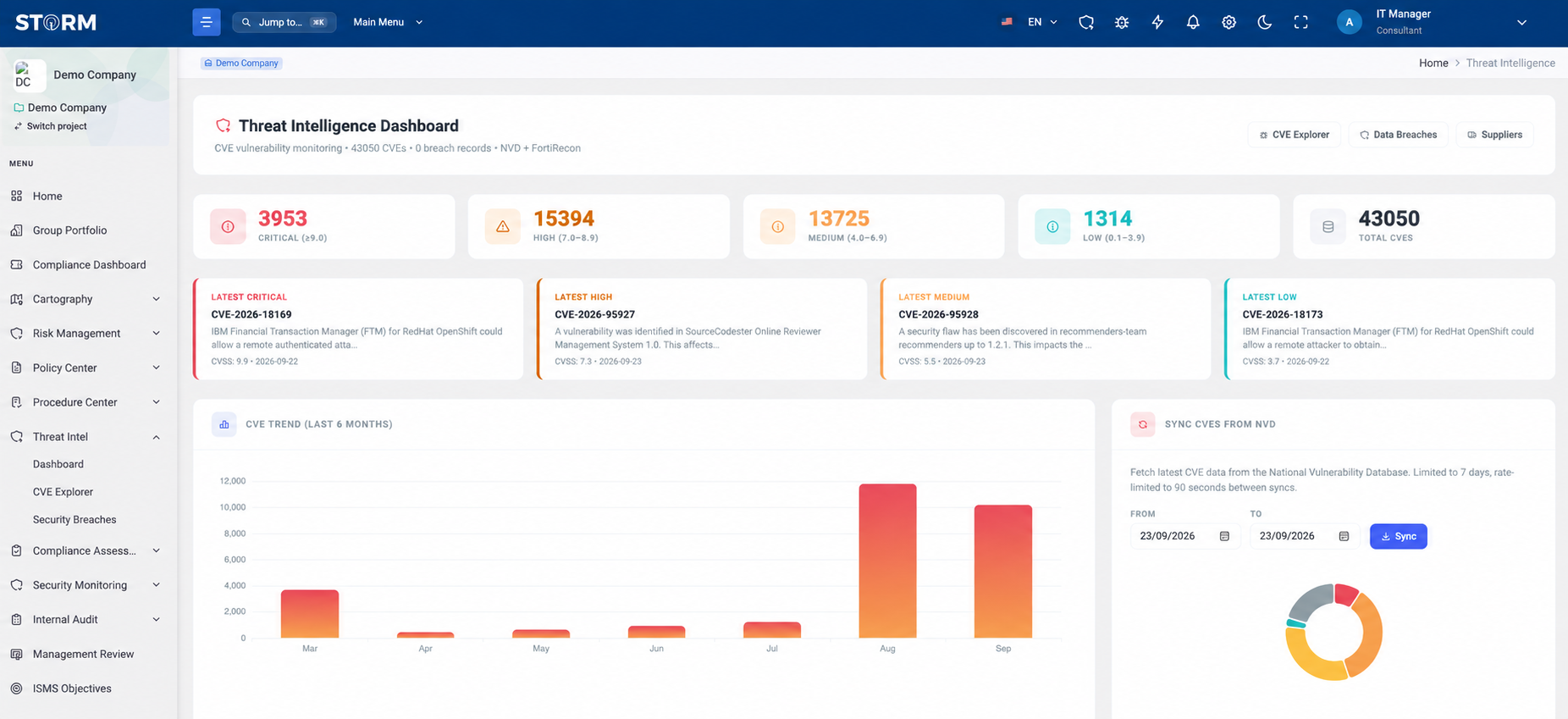
Threat intelligence, CVE and DNS monitoring give security and governance teams additional context for assessment, prioritization and follow-up.
Bring your actual frameworks, risk model, resilience workflows, evidence sources and reporting needs to the STORM demonstration.
Use a 30-minute session to test STORM against your assets, controls, risks, resilience requirements, evidence sources and sector-specific needs.