01 · Control
Process control & automation
Central and distributed control, monitoring, automation and the systems used to operate or configure them.
Bring process-control assets, supporting IT, suppliers, threats, risk decisions and evidence into one operating model for ISO/IEC 27019—without treating energy security as a detached checklist.
STORM supports implementation governance and evidence. It does not reproduce licensed ISO/IEC standard text or replace an accredited certification body.
ISO/IEC 27019 applies sector-specific control guidance to the systems used to produce, transmit, store and distribute energy and to the supporting processes around them.
Central and distributed control, monitoring, automation and the systems used to operate or configure them.
Digital controllers, field equipment, sensors, actuators and related automation components.
Process-control networks, telecontrol applications, telemetry and remote-control technologies.
Smart meters, distributed grid components and energy-management environments including DER and charging infrastructure.
Protection relays, safety PLCs, emergency mechanisms and other digital protection environments.
Supporting applications, historians, reporting systems, software, firmware, facilities and remote-maintenance systems.
STORM identifies IT and OT assets, dependencies and risks, then connects policies, suppliers, technical findings, incidents and evidence around them—without claiming that a tool can decide control applicability for your organisation.
Inventory physical locations, services, data, hardware, software, infrastructure, users and suppliers, then model their internal and external dependencies for scope and impact analysis.
Assets · dependencies · flowsUse STORM-RM, ISO/IEC 27005 or a configurable methodology to connect impact, threats and vulnerabilities to risk criteria, treatments, owners, acceptance and review dates.
Risk register · treatment planCombine CVE and breach intelligence with Nessus and Microsoft Defender findings, asset correlation, CVSS and known-exploited status, SLA tracking and assigned remediation.
Technical risk · remediationMaintain document templates, versions, reviews, approvals and acknowledgements; map policies to controls and retain a complete audit history with automated reminders.
Governance · traceabilityRelate suppliers to supported assets and services, assess business impact and security posture, collect control evidence, tier risk and monitor remediation or exit decisions.
Third-party riskContinuously validate supported Microsoft configurations, pre-populate applicable assessment evidence, track findings and feed audits, KPIs and management reviews from the same operating record.
Monitoring · audit · review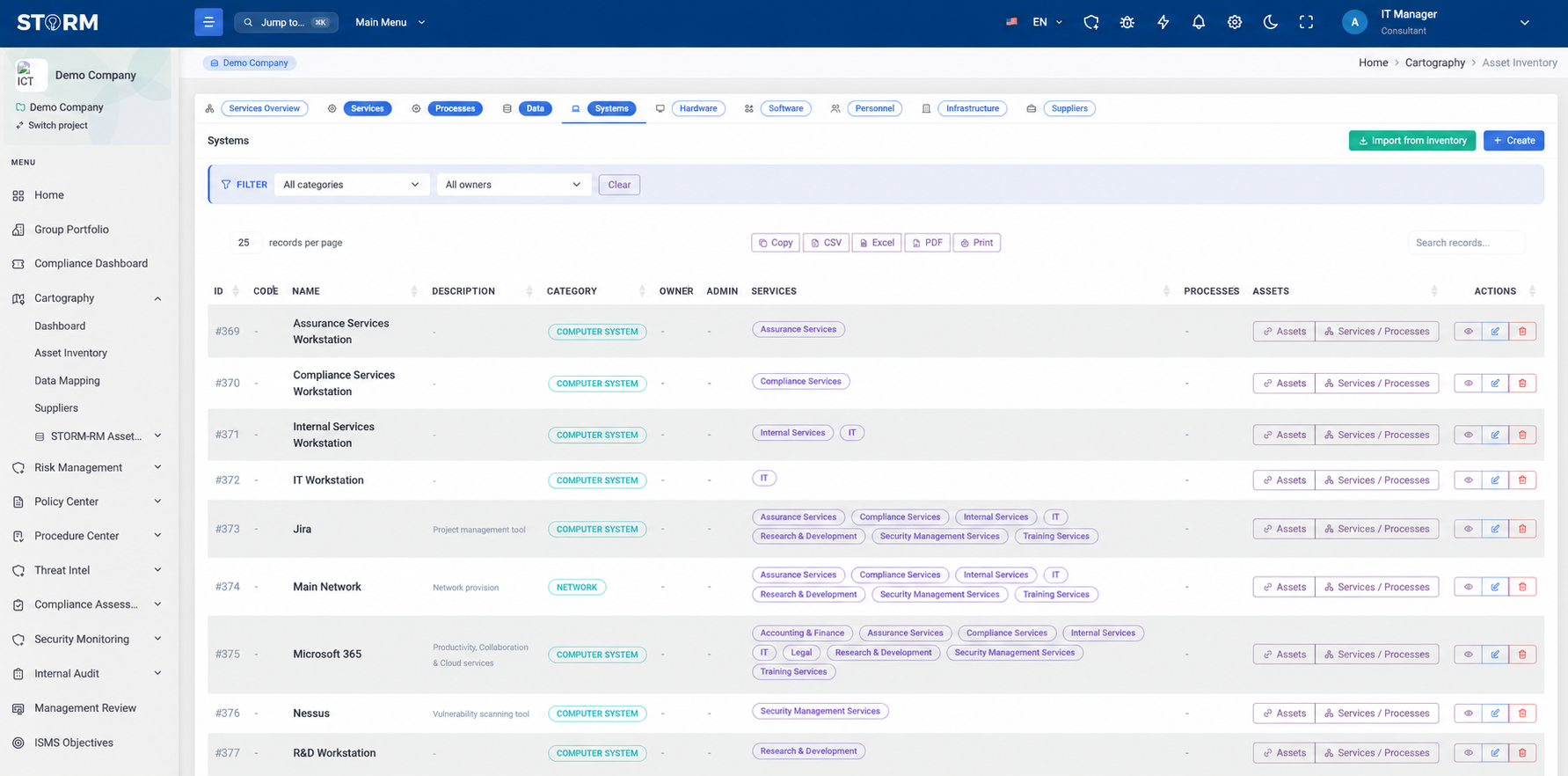
Energy control environments combine operational equipment, supporting applications, networks, premises and external maintainers. STORM Cartography explicitly supports IT and OT assets and makes their service, process and supplier dependencies reusable across impact, threat and risk assessment.
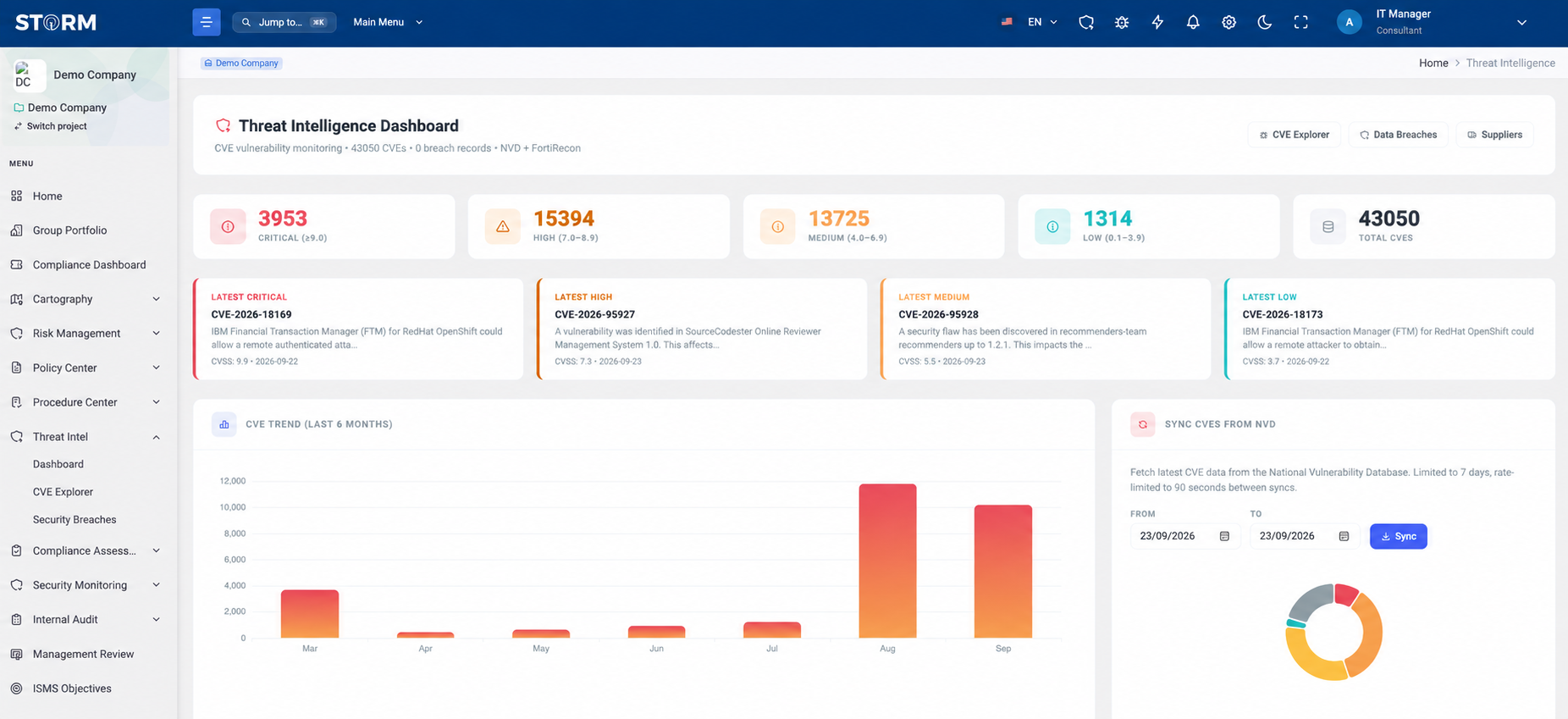
STORM aggregates CVE and breach intelligence and centralises technical findings from supported sources. Teams can correlate vulnerabilities with Cartography assets, prioritise with CVSS and known-exploited context, and follow SLA-driven remediation while control applicability remains an organisational risk decision.
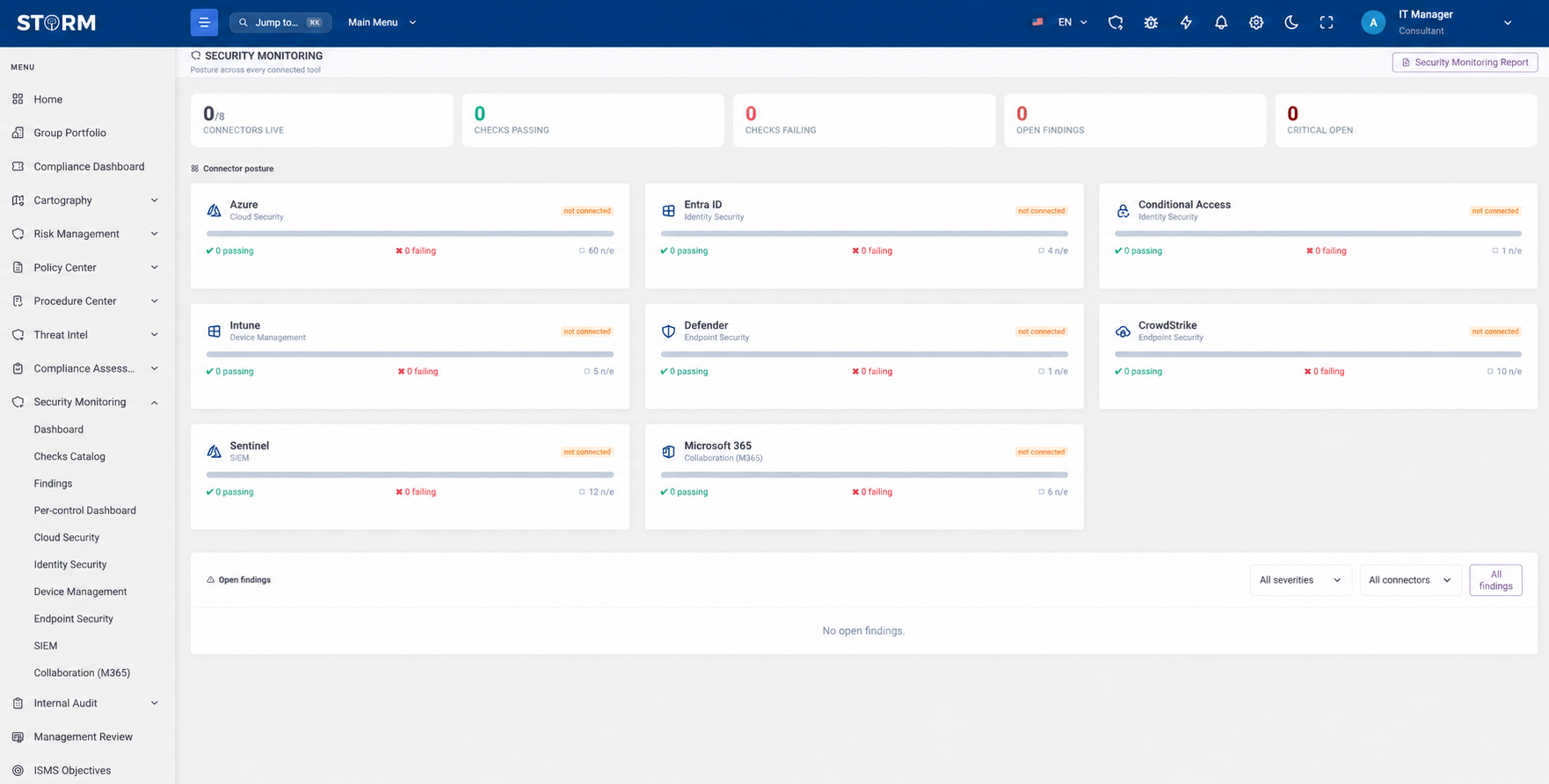
Through Microsoft Graph, STORM continuously evaluates supported device, identity and security configurations across Entra ID, Intune, Defender, Azure, Sentinel and Microsoft 365. Results become historical, reviewable evidence alongside risks, findings and accountable remediation.
The 2024 edition aligns its controls with the organisational, people, physical and technological themes used by ISO/IEC 27002:2022.
Connect policies, roles, asset ownership, suppliers, incidents and continuity with internal audits, measurable objectives and documented management reviews.
Policies · suppliers · audits · management reviewUse granular RBAC, accountable owners, policy acknowledgements and tracked responsibilities to turn written expectations into reviewable action.
Roles · ownership · acknowledgementsKeep sites, physical assets and equipment inside dependency, impact and treatment decisions even where safeguards operate outside the GRC platform.
Inventory · impact · treatment evidenceCorrelate configurations, vulnerabilities, threat intelligence, monitoring evidence and remediation with affected assets, risks and responsible owners.
Monitoring · vulnerabilities · remediationThese summaries describe operating themes, not the licensed control text. Obtain the official standard and determine applicable controls through your organisation's risk-management and ISMS processes.
Use STORM to organise the implementation record while qualified teams retain responsibility for interpretation and control selection.
Identify process-control assets, supporting systems, services, sites and external dependencies.
Cartography · suppliersEvaluate operational impact, threats and vulnerabilities using defined risk criteria.
Impact · threat · scenariosSelect controls and actions, assign owners and document risk acceptance or remediation.
Treatment · policies · tasksMaintain evidence, monitor changes and report status through management and audit workflows.
Monitoring · evidence · reportingA credible implementation does not turn guidance into a product promise.
Use a focused walkthrough to test STORM against your control systems, supporting IT, suppliers, threat sources, risk method and evidence requirements.