01 · Scope002
System categorisation
Identify BES Cyber Systems and retain the context used to determine impact and applicable security obligations.
Bring assets, dependencies, cyber risks, policies, personnel responsibilities, suppliers, vulnerabilities, incidents, recovery work and evidence into one governed operating record for applicable NERC CIP Reliability Standards.
The supplied STORM technical description does not list NERC CIP as a current built-in framework. STORM provides documented governance, risk and evidence workflows; applicability, versions and mappings must be confirmed.
The NERC catalogue separates the CIP family into distinct Reliability Standards. Responsible Entities need the applicable versions, requirements and evidence for their jurisdiction and BES Cyber System context.
Identify BES Cyber Systems and retain the context used to determine impact and applicable security obligations.
Connect security governance, accountable roles, access responsibilities, awareness and supporting personnel records.
Organise the assets, boundaries, access controls and operational safeguards relevant to protected cyber environments.
Maintain response and recovery plans, assigned actions, incident records, testing evidence and lessons learned.
Track configuration and vulnerability work, protected information and relevant communications safeguards.
Bring vendor dependencies, physical-security concerns and emerging internal network monitoring obligations into oversight.
The technical description supports many underlying governance activities, but it does not name NERC CIP among the platform's current built-in standards.
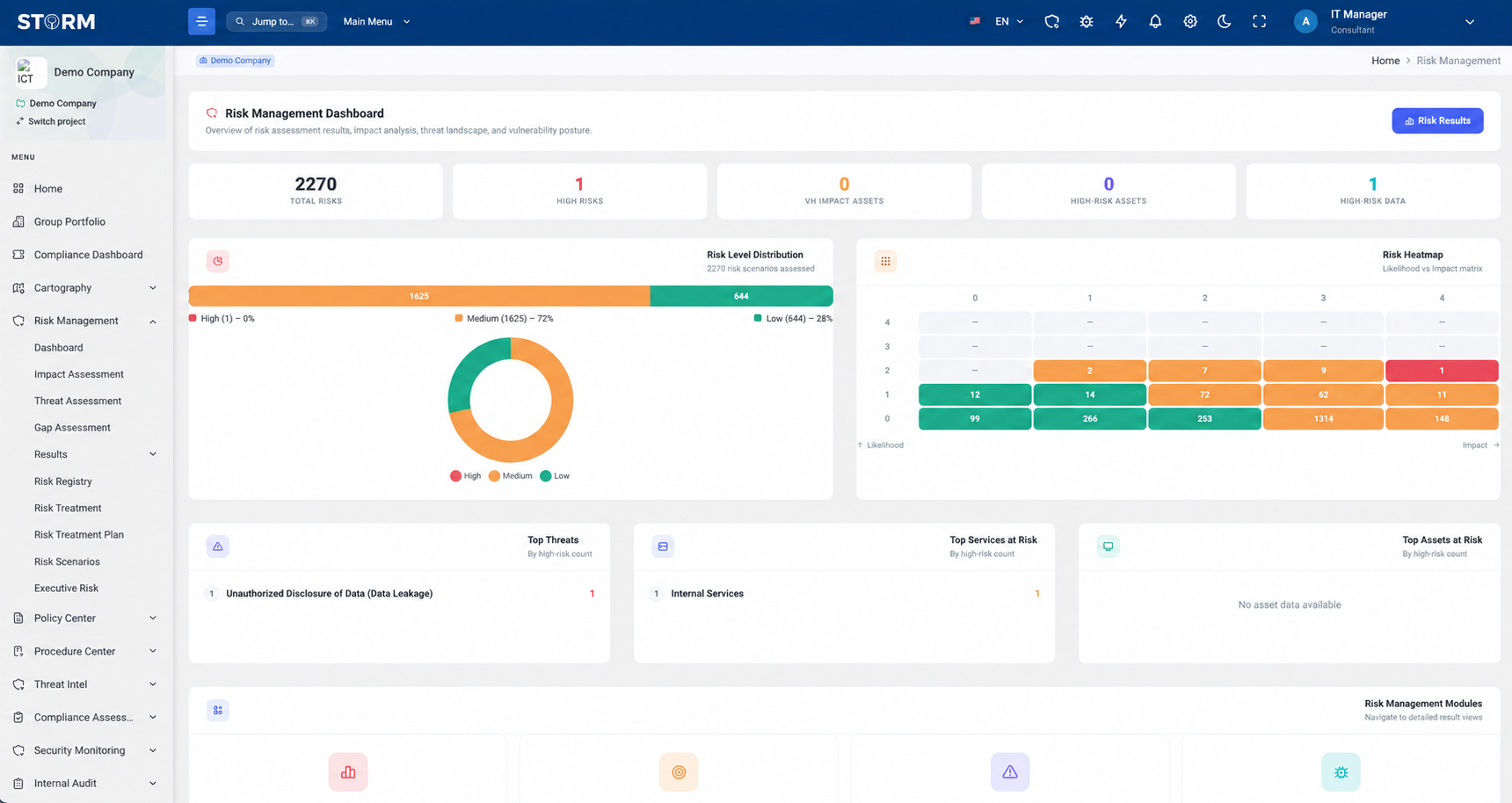
STORM can organise assets, risks, controls, evidence and improvement work while qualified compliance and engineering teams determine NERC CIP applicability and operate the required technical safeguards.
Inventory locations, services, processes, data, hardware, software, infrastructure, users and suppliers, then model their dependencies.
Assets · services · flowsConnect impact, threats and vulnerabilities to defined risk criteria, treatment decisions, controls, owners and review dates.
Risk register · treatmentCentralise supported Nessus and Microsoft Defender findings, correlate them with assets and track SLA-driven remediation.
Findings · priority · actionsManage document versions, approvals, reviews, acknowledgements, mappings and retained history with accountable owners.
Governance · traceabilityClassify suppliers, assess business impact and security posture, request control evidence and monitor remediation.
Third-party risk · evidenceBring incident records, root causes, corrective actions, audit findings and management decisions into one follow-through cycle.
Response · audit · improvement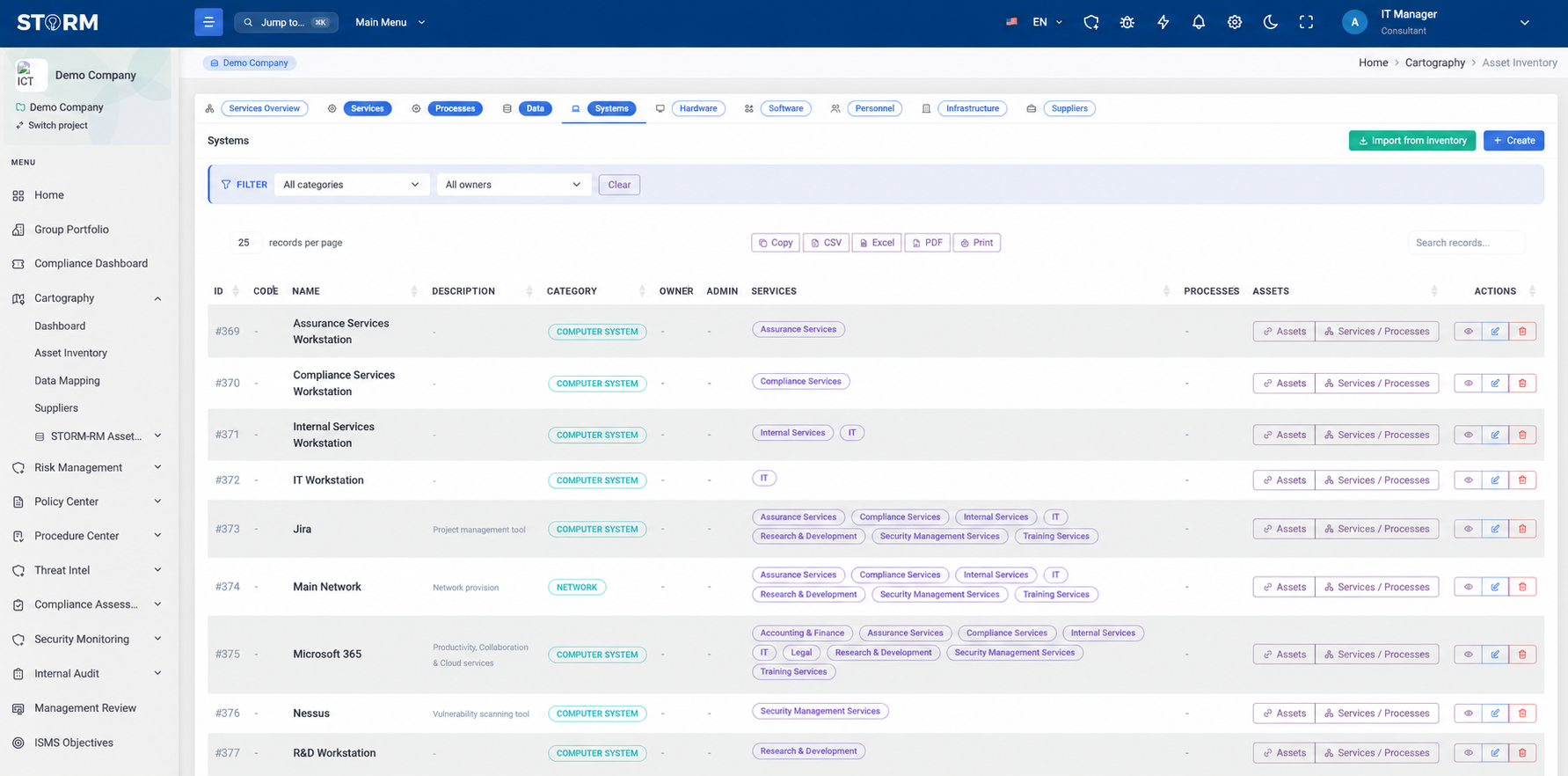
STORM Cartography models IT and OT assets together with services, processes, users, locations and external providers. That context can support impact, threat and risk work, but does not itself make a regulatory categorisation decision.
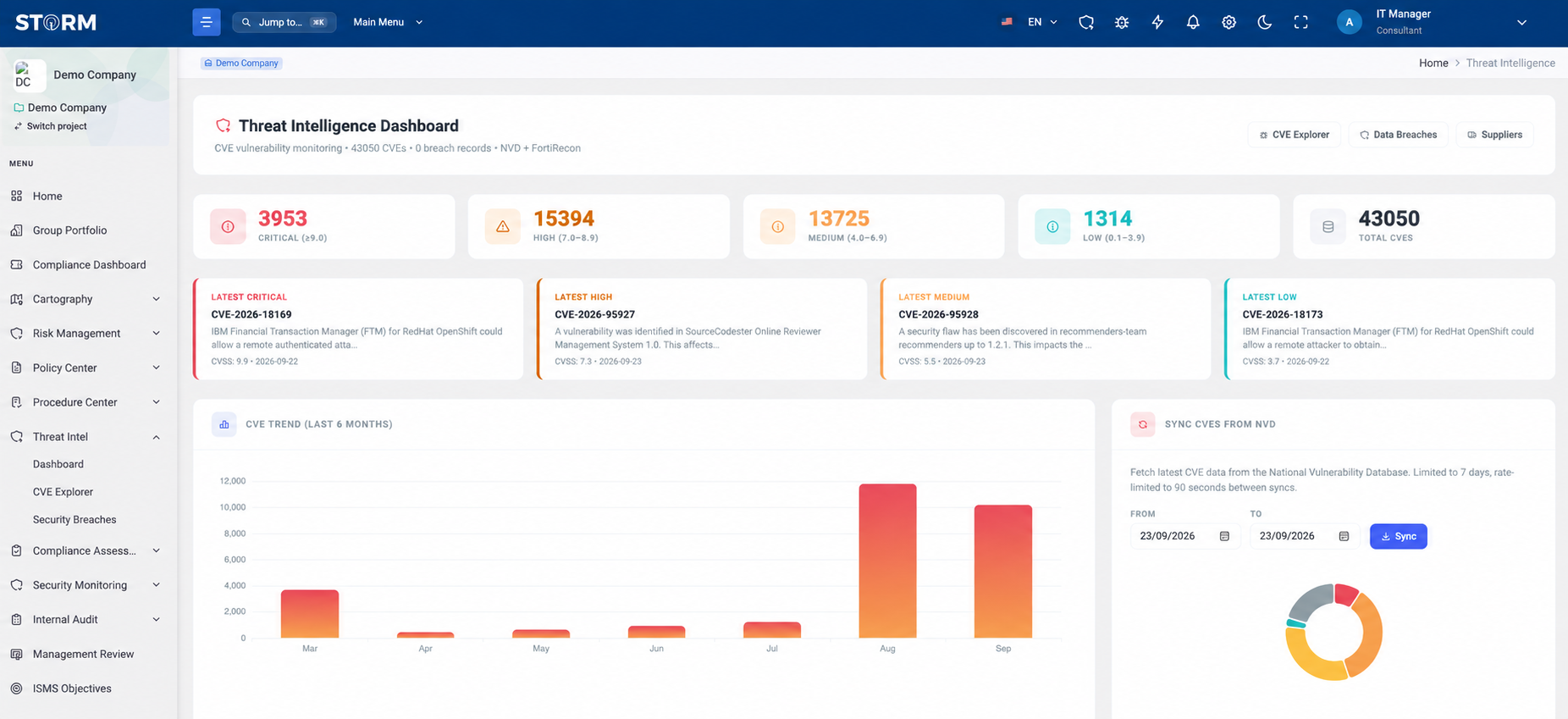
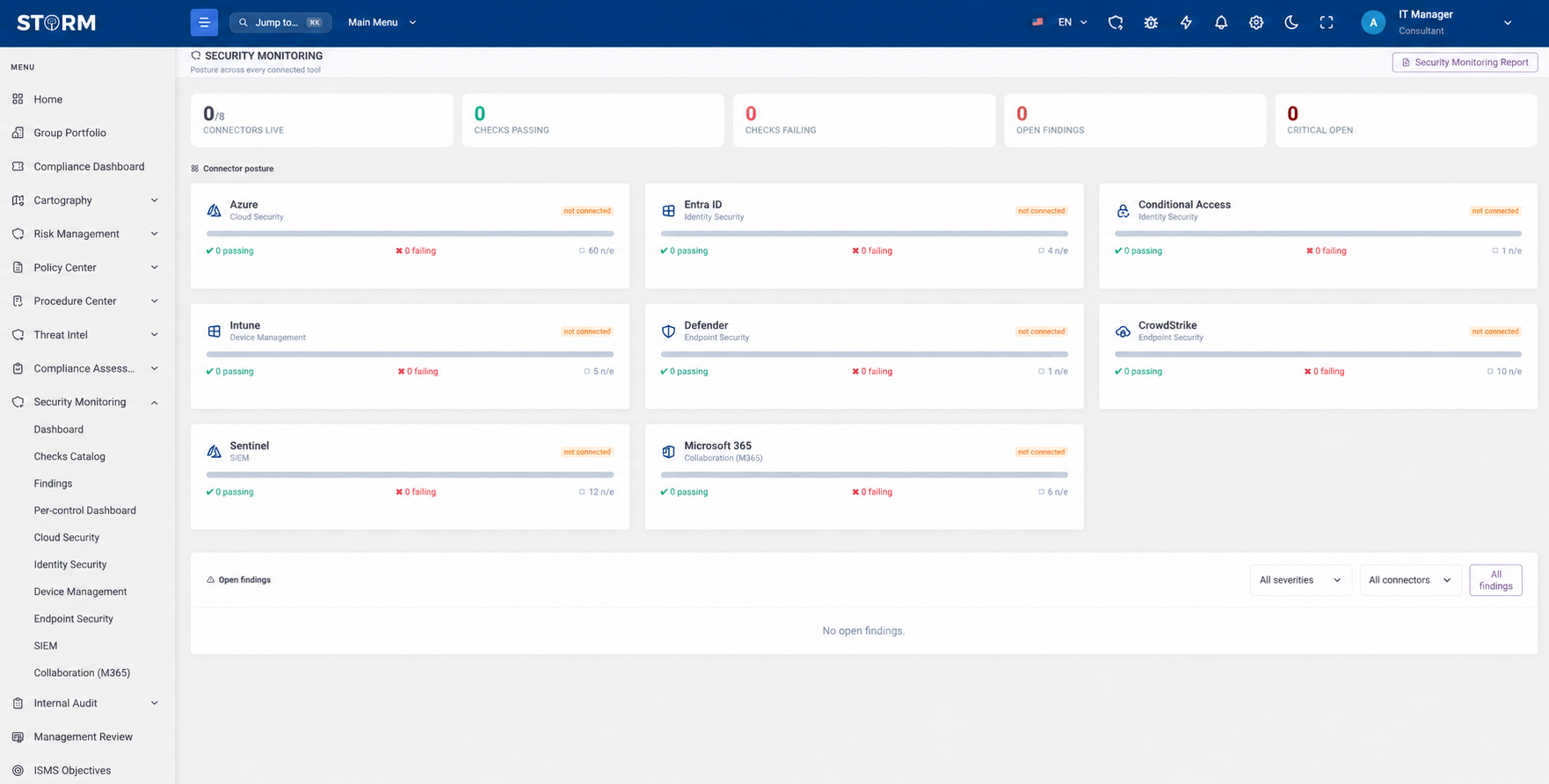
Threat intelligence and technical vulnerability workflows add current context to risk decisions. Microsoft security monitoring can generate evidence for supported cloud configurations; it is not presented as complete NERC CIP or OT network monitoring.
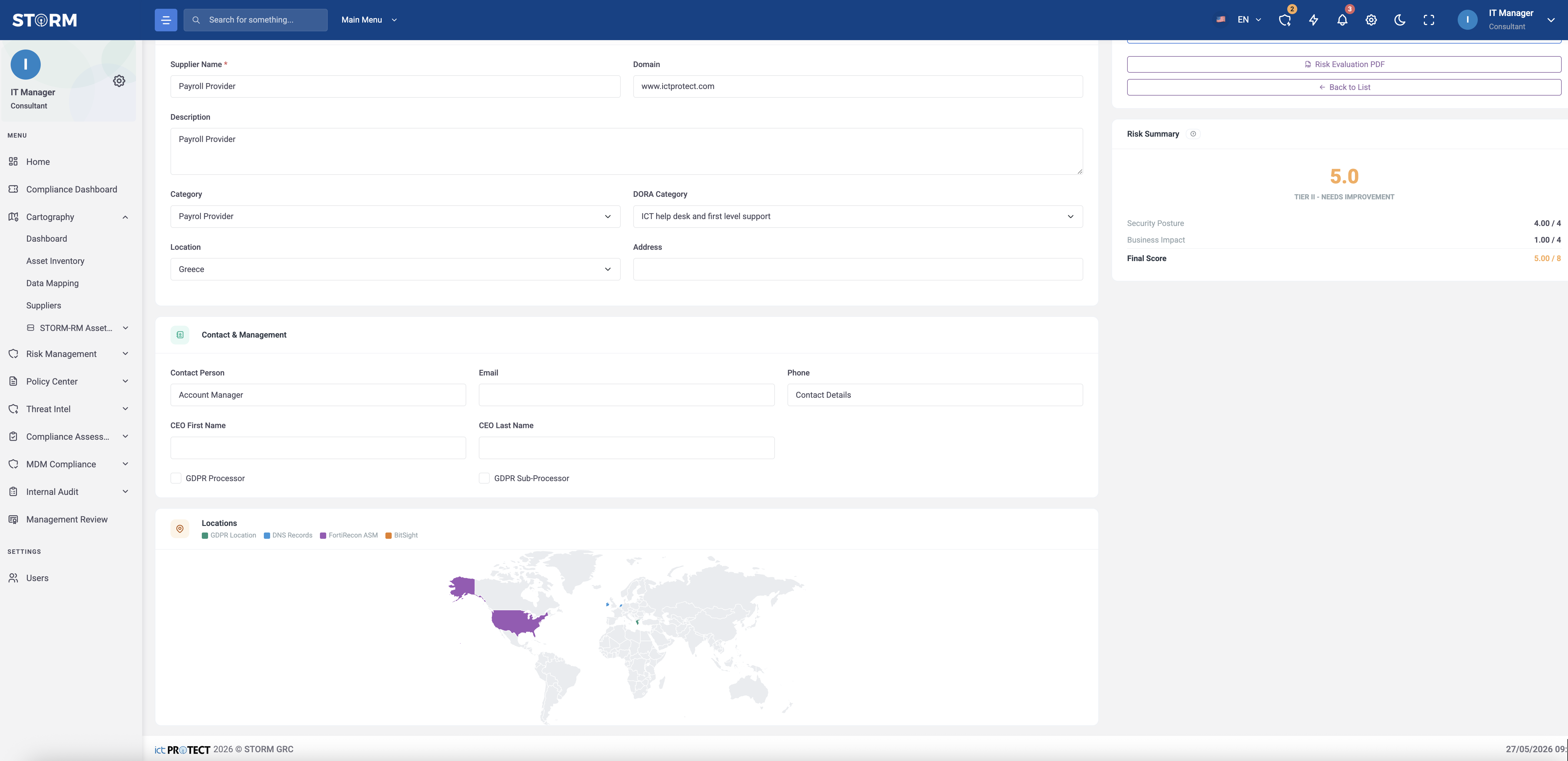
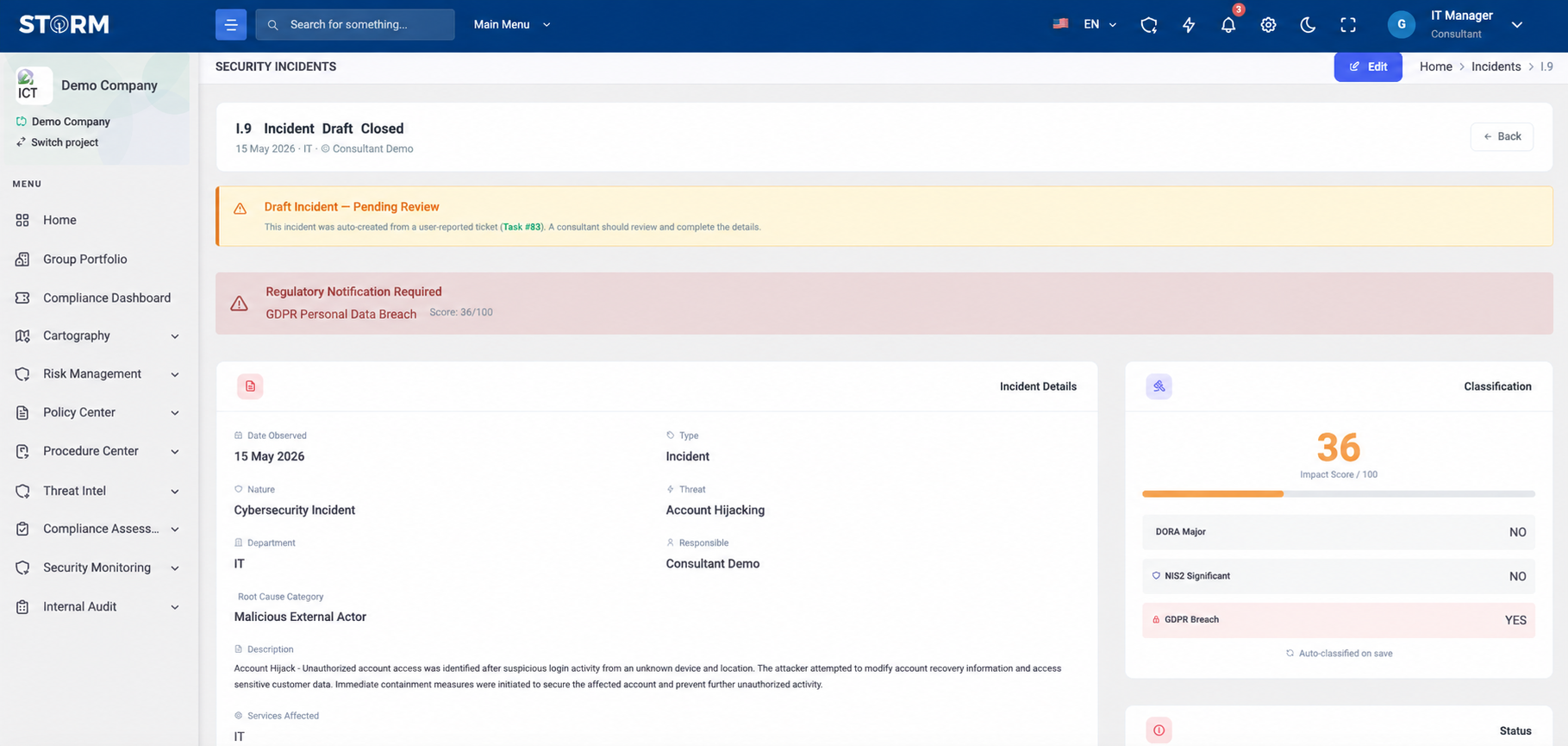
Supplier assessments, incident records, controlled policies, audit findings and management reviews create a traceable operating record around external dependencies and response activity.
These groupings summarise the public standard titles and do not reproduce or replace the official Reliability Standards.
Maintain the system context, security governance, personnel responsibilities and training records used by the programme.
Categorisation · management · peopleConnect electronic and physical boundaries, access responsibilities and system-security work to affected assets.
Perimeters · physical · system securityCoordinate incidents, recovery, configuration changes, vulnerability work, information protection and communications evidence.
Response · recovery · change · protectionBring supply-chain risk, physical-security concerns and future internal network monitoring obligations into review.
Suppliers · physical security · monitoringNERC publishes separate enforced and future-enforcement versions. Always use the official standard page, implementation plan and jurisdiction-specific status when determining an obligation.
Use STORM for the connected governance record while regulatory interpretation and compliance determinations remain with the Responsible Entity and its qualified advisers.
Determine jurisdiction, functional applicability, effective versions, systems and responsible roles.
Applicability · versionsRelate applicable requirements to assets, processes, policies, safeguards, suppliers and accountable owners.
Scope · controls · ownershipPerform required security, personnel, vulnerability, response, recovery and supply-chain activities.
Operations · evidence · actionsTest evidence, remediate findings and retain audit and management decisions through change.
Audit · remediation · reviewA reliable implementation starts with the applicable official standards and honest product boundaries.
Walk through your applicable standards, assets, dependencies, personnel, suppliers, vulnerabilities, incidents, recovery work and evidence—and identify the NERC-specific content that still requires configuration.