Context & scope
Understand the organisation, interested parties, roles in the AI ecosystem and the boundaries of the AIMS.
Bring AI-related scope, responsibilities, risks, policies, suppliers, evidence and improvement actions into a governed workspace while building an Artificial Intelligence Management System.
STORM provides documented governance building blocks. Its current technical description does not list a ready-made ISO/IEC 42001 assessment, AI model registry, AI impact-assessment engine or AI-specific performance monitoring.
ISO/IEC 42001 uses the familiar management-system structure and adds AI-specific risk, impact and lifecycle considerations. The licensed standard remains the authoritative source for the requirements.
Understand the organisation, interested parties, roles in the AI ecosystem and the boundaries of the AIMS.
Set direction, approve an AI policy and assign clear responsibilities and authorities.
Address AI-related risks and opportunities, select objectives and plan controlled change.
Provide resources, competence, awareness, communication and controlled documented information.
Operate the AIMS, assess and treat AI risks and evaluate impacts arising from AI systems.
Monitor performance, conduct internal audits and complete management reviews.
Manage nonconformities, corrective actions and continual improvement of the AIMS.
This distinction keeps the page useful without implying product functionality that is absent from the supplied STORM technical description.
STORM can organise foundational records and workflows needed by an AIMS implementation. AI-specific requirements, taxonomies and assessment content must be defined and validated for the organisation.
Use records for services, data, software, infrastructure, people and suppliers as inputs when defining which AI-enabled activities and dependencies belong in scope.
Cartography · dependenciesCapture custom risks with likelihood, impact, controls, treatment strategy, owners, review dates, mitigation plans and supporting attachments.
Risk registry · treatmentMaintain policies, procedures and guidance with versions, owners, approvals, reviews, acknowledgements, reminders and a complete document history.
Policy Center · audit trailRecord suppliers, assess business impact and security posture, collect evidence and track remediation using organisation-defined questionnaires where appropriate.
TPRM · supplier evidenceAssign mitigation and corrective actions, target dates, reviews and attachments so governance decisions have accountable follow-through.
Owners · dates · evidenceBring relevant risks, supplier results, policy status, incidents, audit findings and improvement actions into management-review records and decisions.
Review · decisions · improvement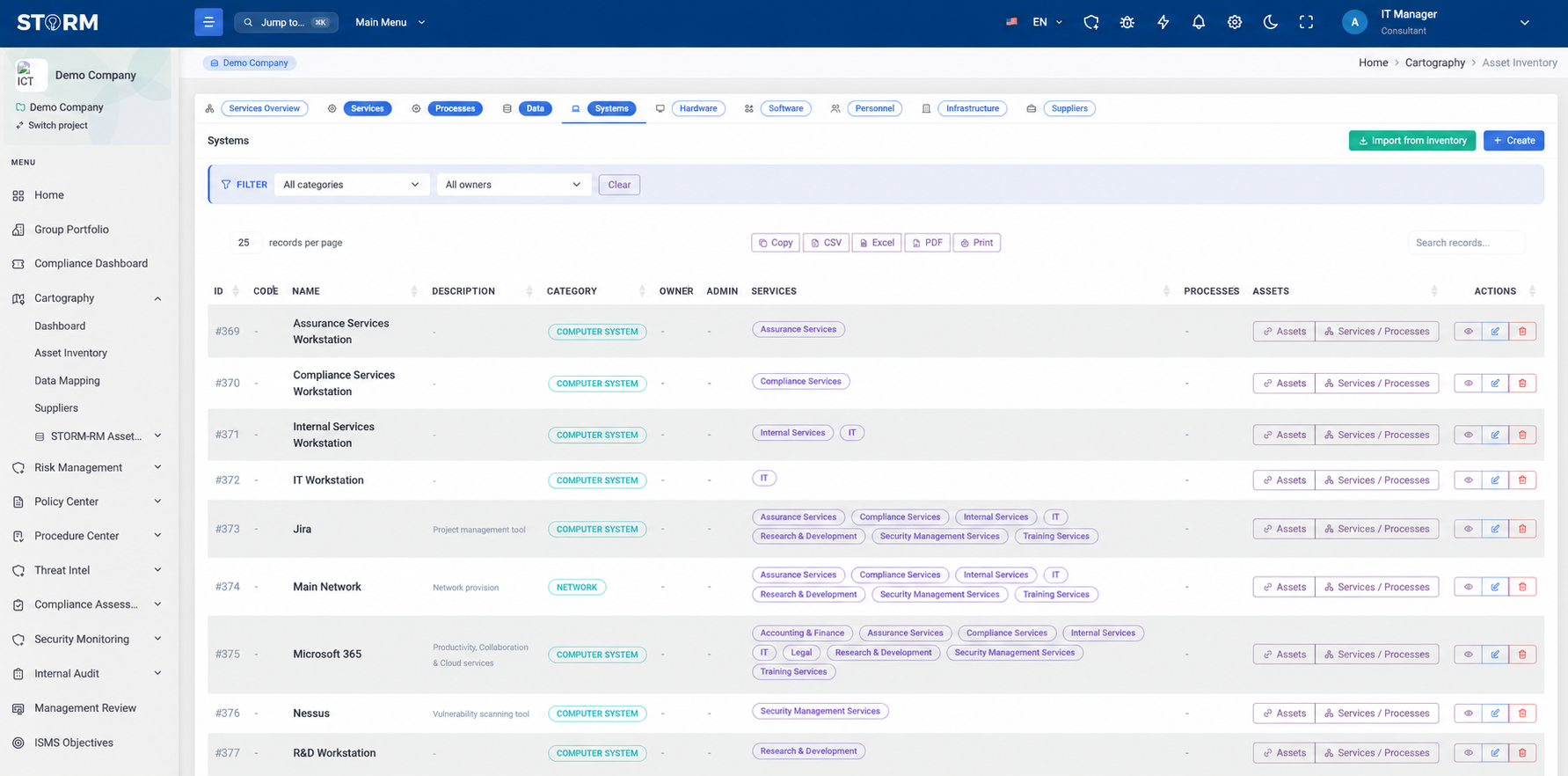
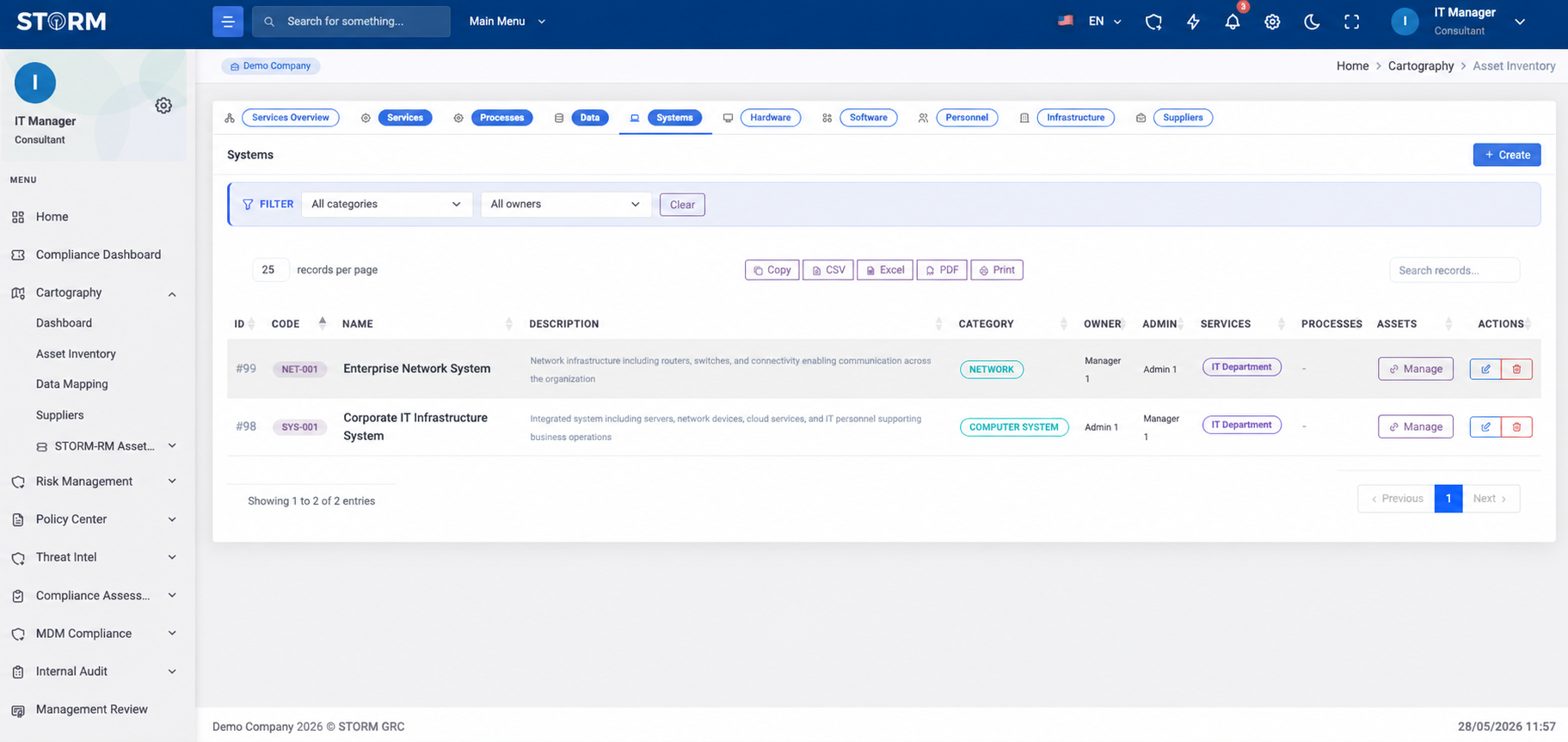
STORM Cartography provides reusable context for scoping: the business services, data, software, infrastructure, people and external providers connected to the activities being governed.
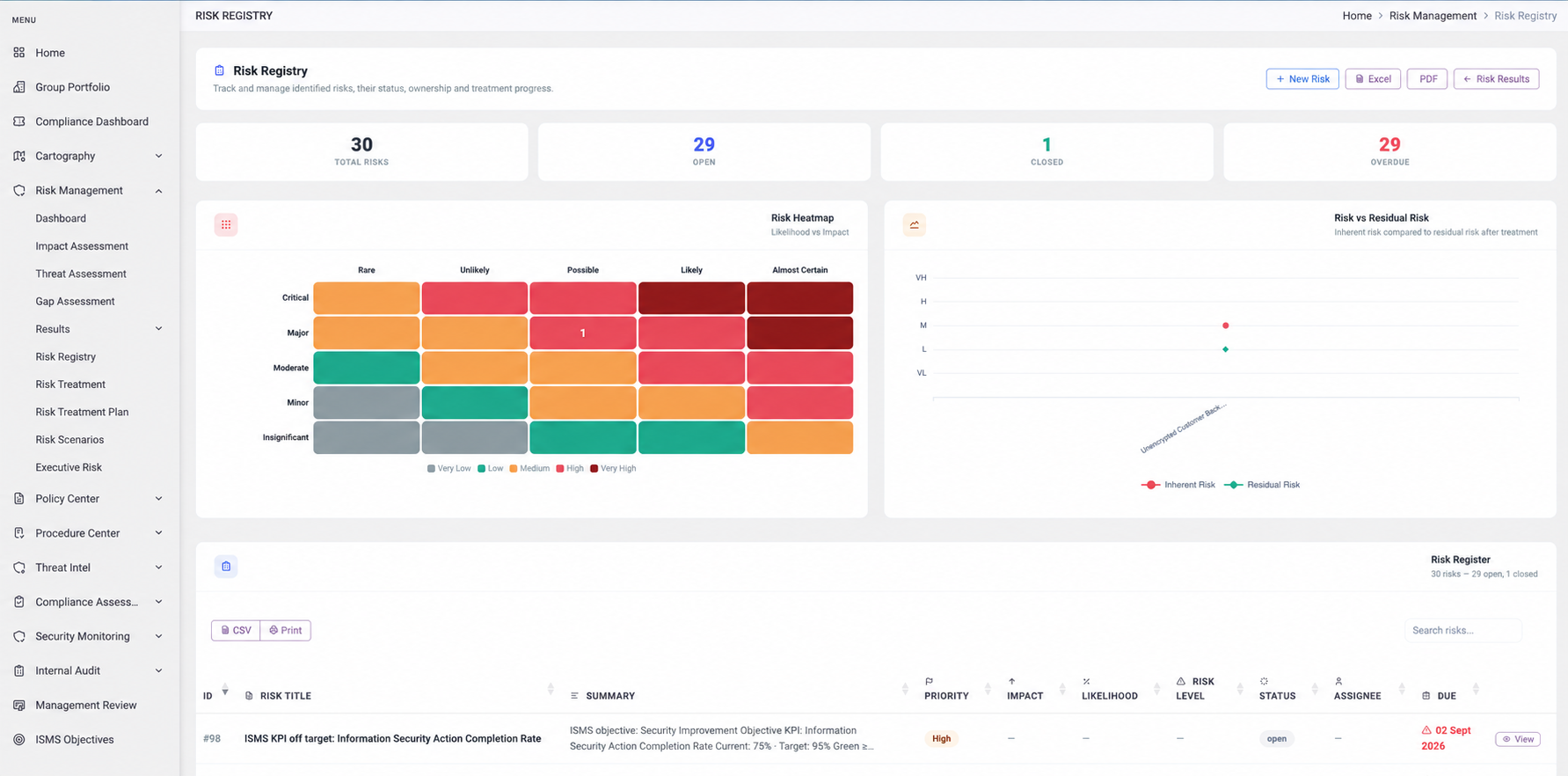
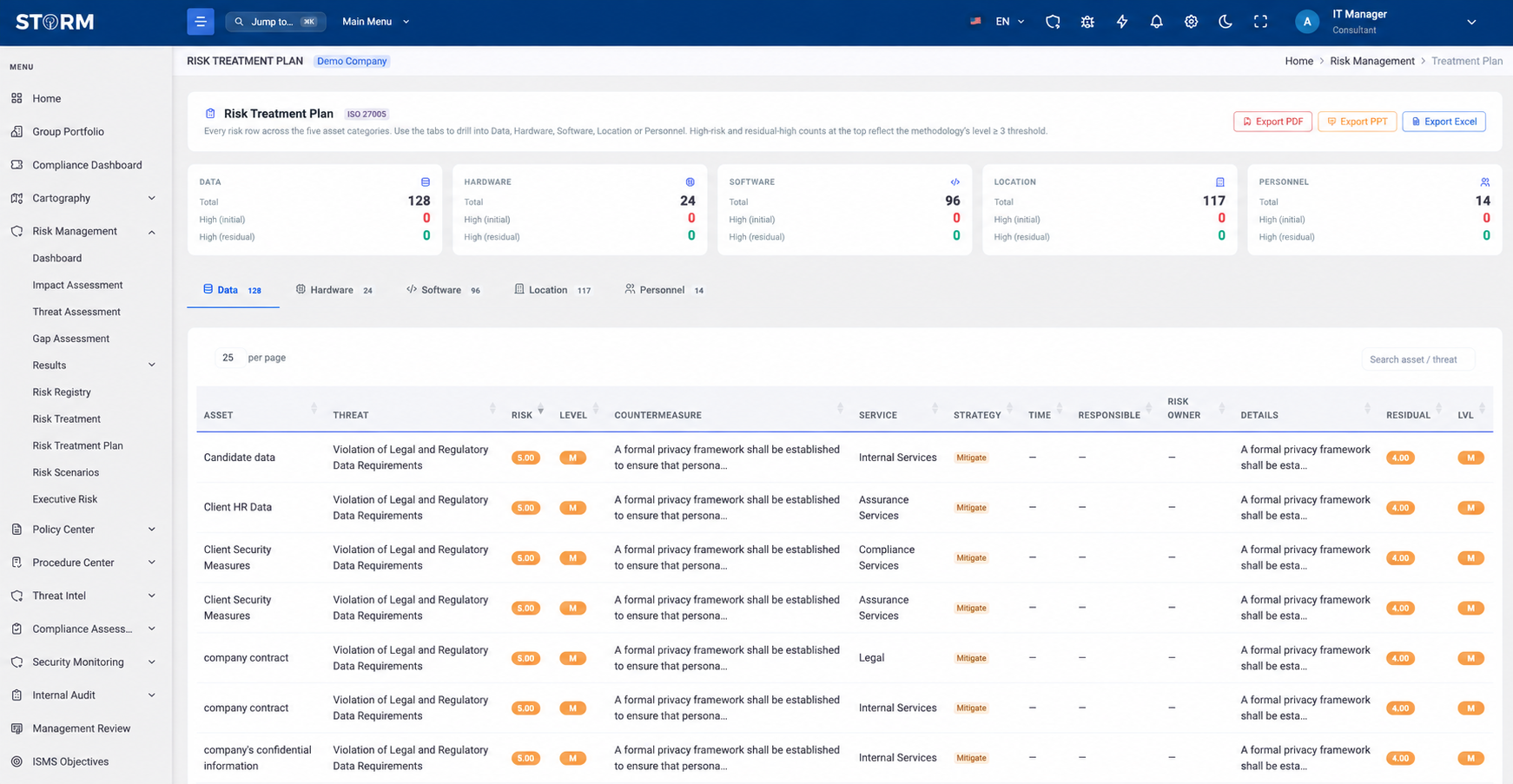
The custom risk register can hold organisation-defined AI risks and treatment decisions. It is a flexible record, not a substitute for an approved AI risk or impact-assessment method.
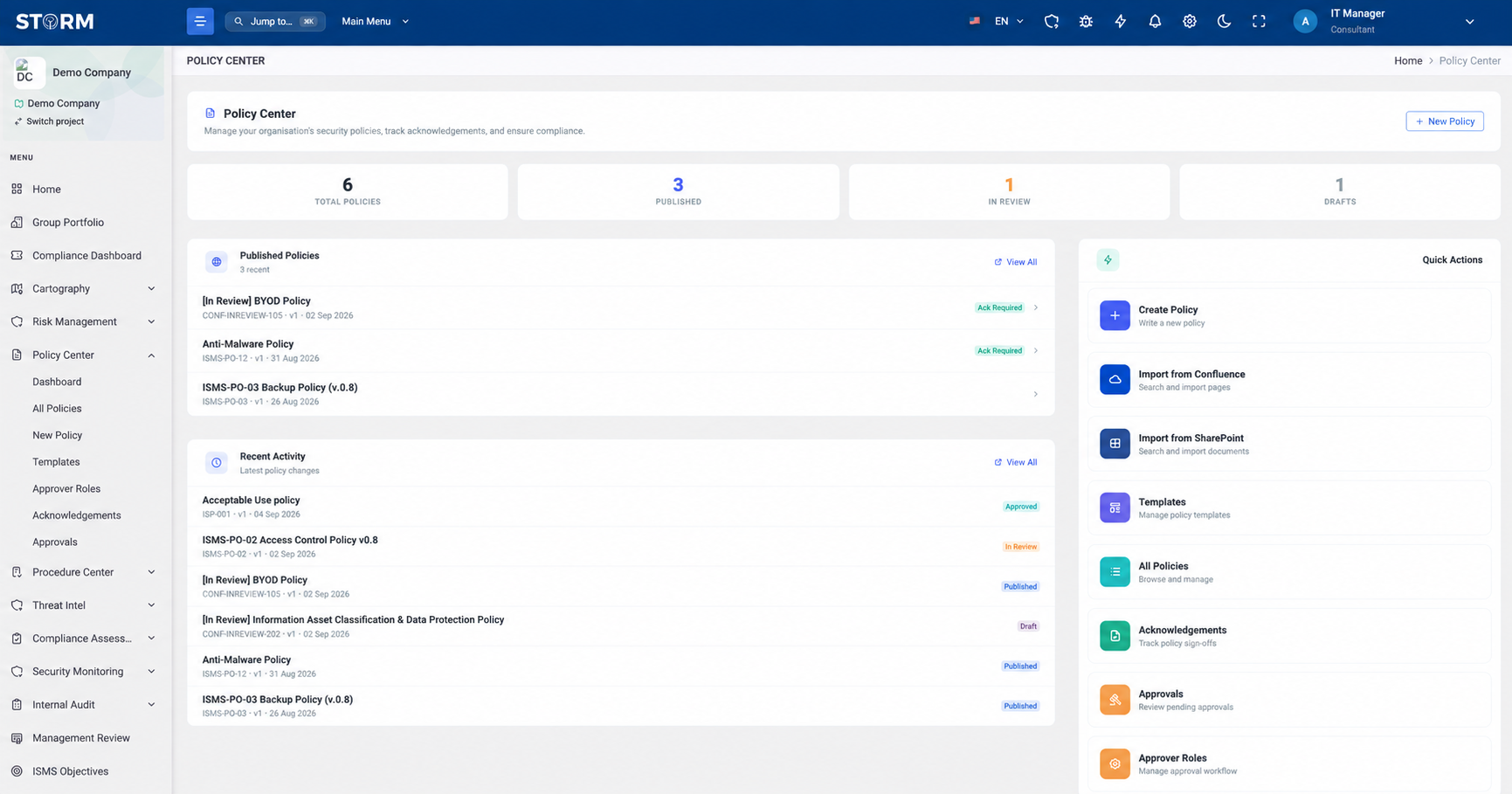
Use the documentation lifecycle for AI policies, acceptable-use rules, approval procedures, supplier expectations and role-specific guidance, while preserving history and accountability.
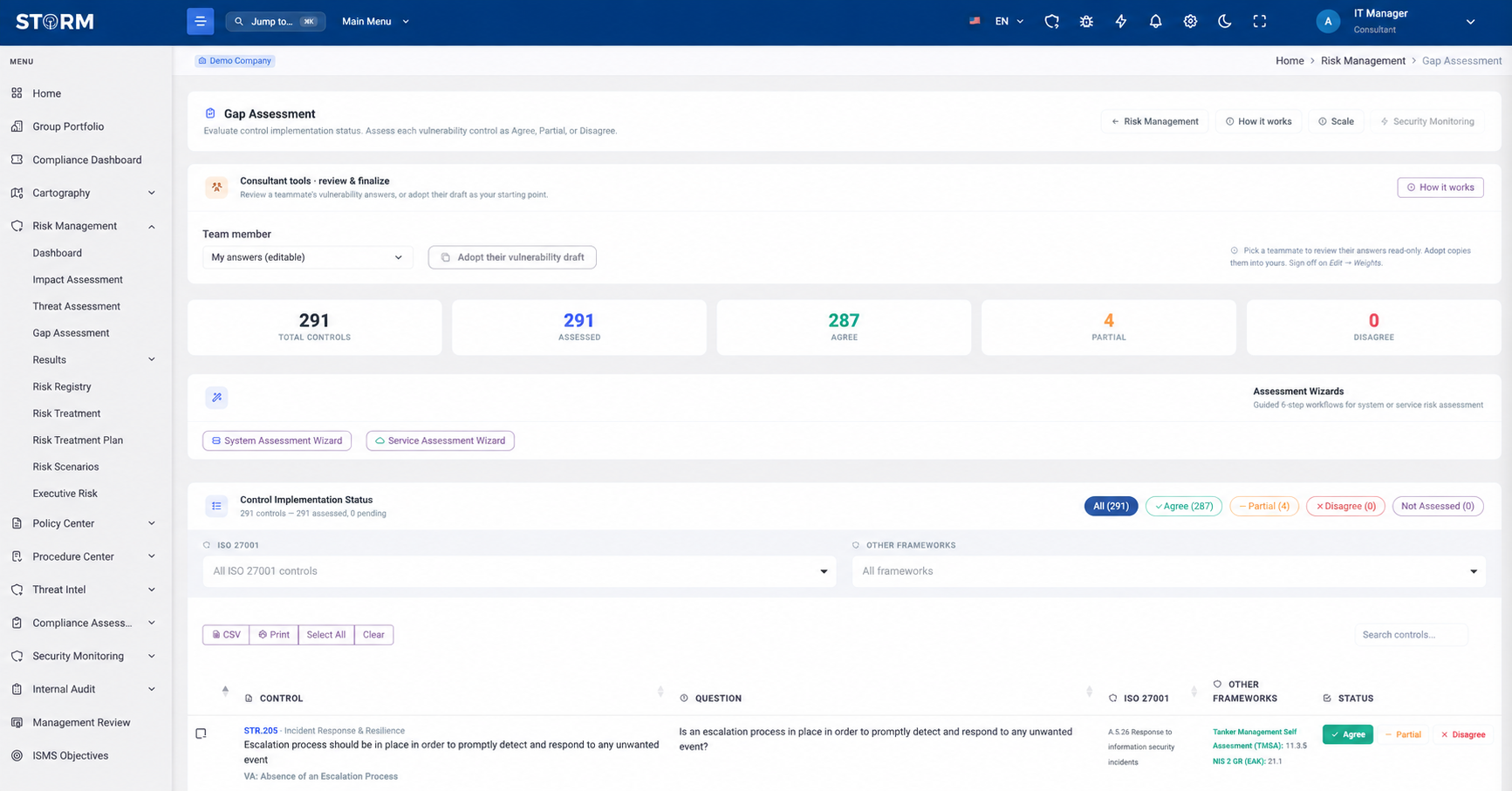
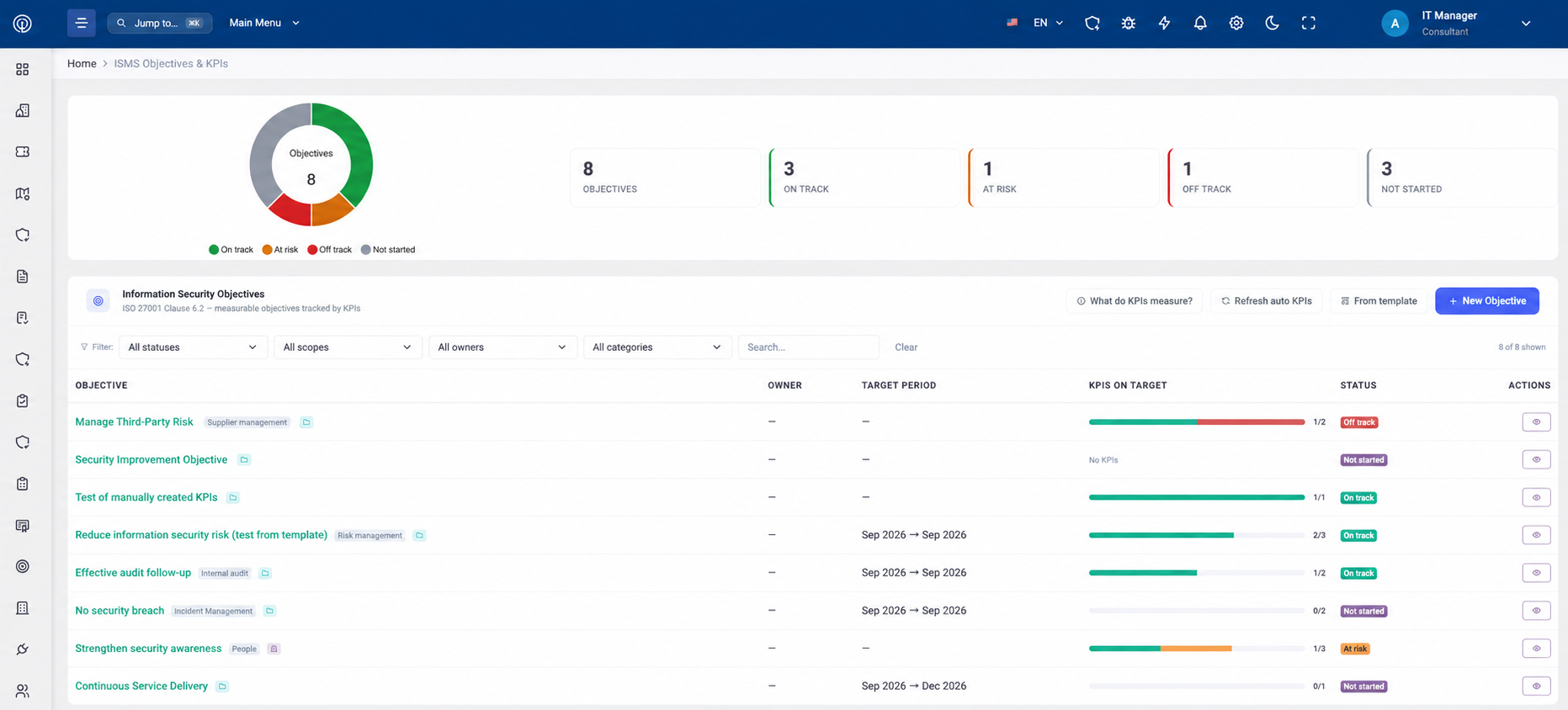
STORM provides action tracking, configurable objectives and KPI records, and management-review inputs. Their use for an AIMS must be configured and validated rather than assumed from the existing ISMS setup.
Annex A adds AI-focused control objectives. These summaries are orientation only; use the licensed standard to determine the exact applicable controls and implementation evidence.
Set and maintain organisational direction for the responsible development, provision or use of AI systems.
Policy · review · ownershipDefine roles, responsibilities, authorities and processes for reporting concerns about AI systems.
Accountability · escalationUnderstand the data, tooling, systems, computing resources and people involved in AI activities.
Inventory · dependenciesEstablish a consistent way to identify, document and respond to impacts on relevant people and groups.
Impact assessment · evidenceApply governance throughout design, development, verification, validation, deployment, operation and retirement.
Lifecycle · change · assuranceGovern data acquisition, quality, provenance, preparation and appropriate use across the lifecycle.
Data governance · traceabilityDefine what information is communicated to users and stakeholders and how AI-related events are reported.
Transparency · communicationSet processes and responsibilities for appropriate organisational use, including monitoring and operating instructions.
Acceptable use · oversightAddress responsibilities and risks when AI systems, components, data or services depend on external parties.
Suppliers · customers · evidenceA practical implementation begins with accountable scope and ends with evidence-led review—not with a generic checklist.
Identify AI-enabled activities, systems, data, people, suppliers and intended purposes.
Context · scope · inventoryDefine and apply approved risk and impact-assessment methods.
Risk · impact · opportunityApprove policy, roles, objectives, controls, lifecycle rules and supplier expectations.
Policy · controls · ownershipMonitor defined measures, review evidence, audit the AIMS and escalate exceptions.
Measures · audit · reviewCorrect gaps, respond to change and document management decisions and learning.
Actions · change · improvementSTORM can provide an operating workspace around an AIMS implementation. AI-specific content, technical assurance and certification require additional defined methods and qualified review.
Use a focused discussion to review AI scope, risk methodology, policies, suppliers, evidence, actions and reporting—and identify which ISO/IEC 42001 content or product configuration is still required.