STORM GRCGRC + security operations
Twelve named modules sharing the same asset, control and risk model.
Risk & complianceAudit & incidentsSuppliers & BCPThreat intel & phishing
Both platforms publish integrated cyber risk, compliance, third-party management, remediation, external intelligence and executive reporting. STORM is the clearer operational fit when the same environment must also run dedicated phishing exercises, named threat-intelligence workflows, security monitoring, maritime operations and a path to discuss on-premise deployment.
Source-backed comparison · Centraleyes information links to its official website · Reviewed 1 October 2026
Twelve named modules sharing the same asset, control and risk model.
AI-powered evidence, remediation and reporting across cyber risk and compliance.
Centraleyes publishes strong AI-assisted cyber GRC capabilities. STORM stands out for teams that want their governance platform to explicitly include operational modules, named security integrations and sector-specific maritime workflows.
Risk, compliance, audits, incidents, assets, suppliers, continuity, policies, tasks and reporting connect directly to phishing, threat intelligence and security monitoring.
Platform scopeSTORM publishes a practical sequence from asset cartography and risk through policies, third parties and continuous monitoring.
Operational methodGoPhish exercises, FortiRecon threat intelligence, CVE and DNS monitoring are documented as part of the STORM environment.
Named capabilitiesSTORM publishes shore, fleet and vessel workflows and offers a discussion path for on-premise deployment under strict locality requirements.
Sector and architectureThe comparison below acknowledges Centraleyes' published strengths and isolates the requirements for which STORM documents a more explicit or more specialized approach.
This is a focused comparison of documented differentiators, not a complete feature inventory. An unlisted Centraleyes capability is not treated as unavailable; confirm current functionality, integrations, deployment and contract terms in both demonstrations.
STORM's differentiator is the explicit route from the operating environment to risk decisions, security evidence and executive reporting.
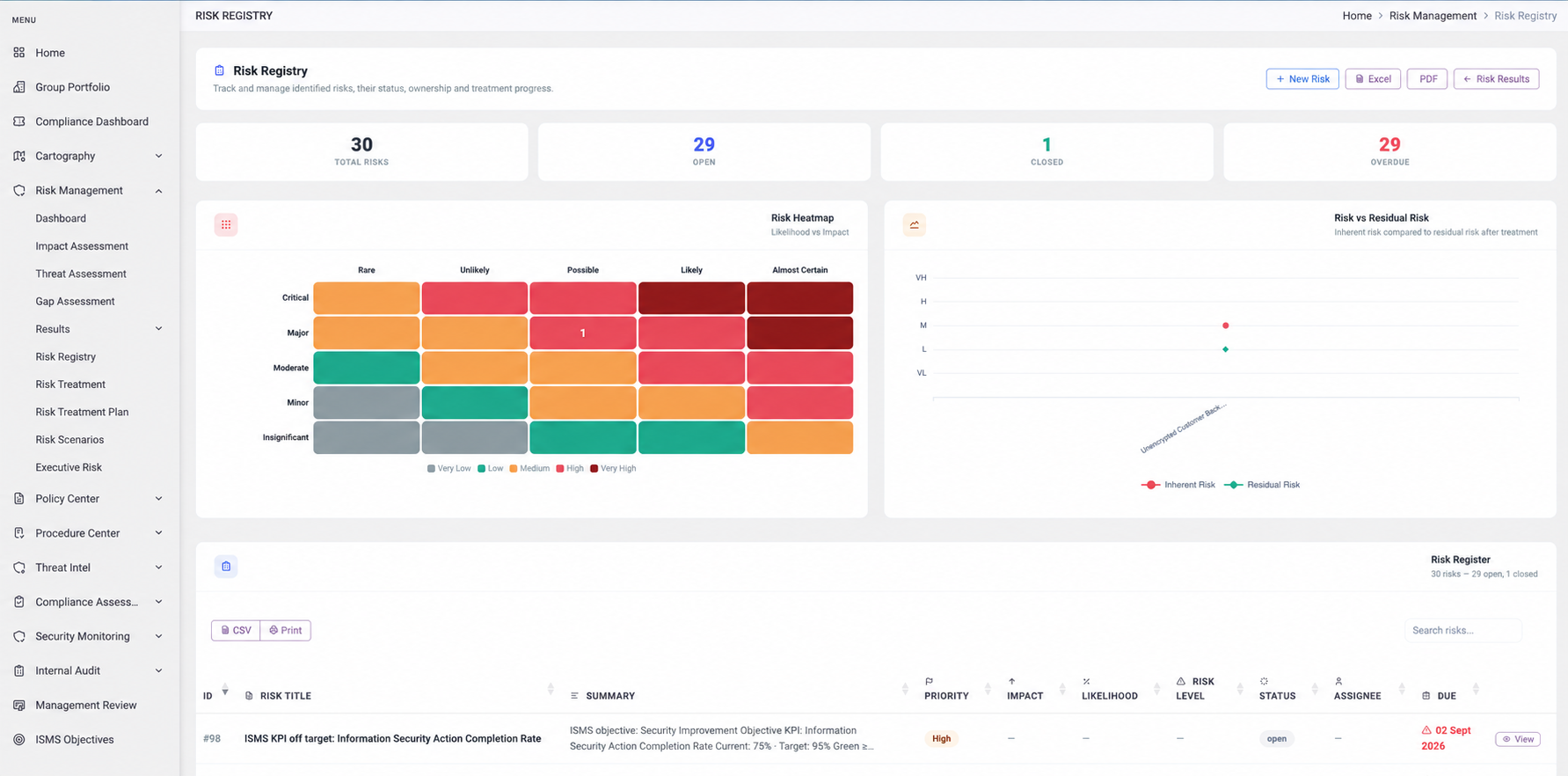
STORM ties cartography, impact and threat assessment to risk scenarios, treatments and residual risk, keeping framework activity connected to the underlying exposure.
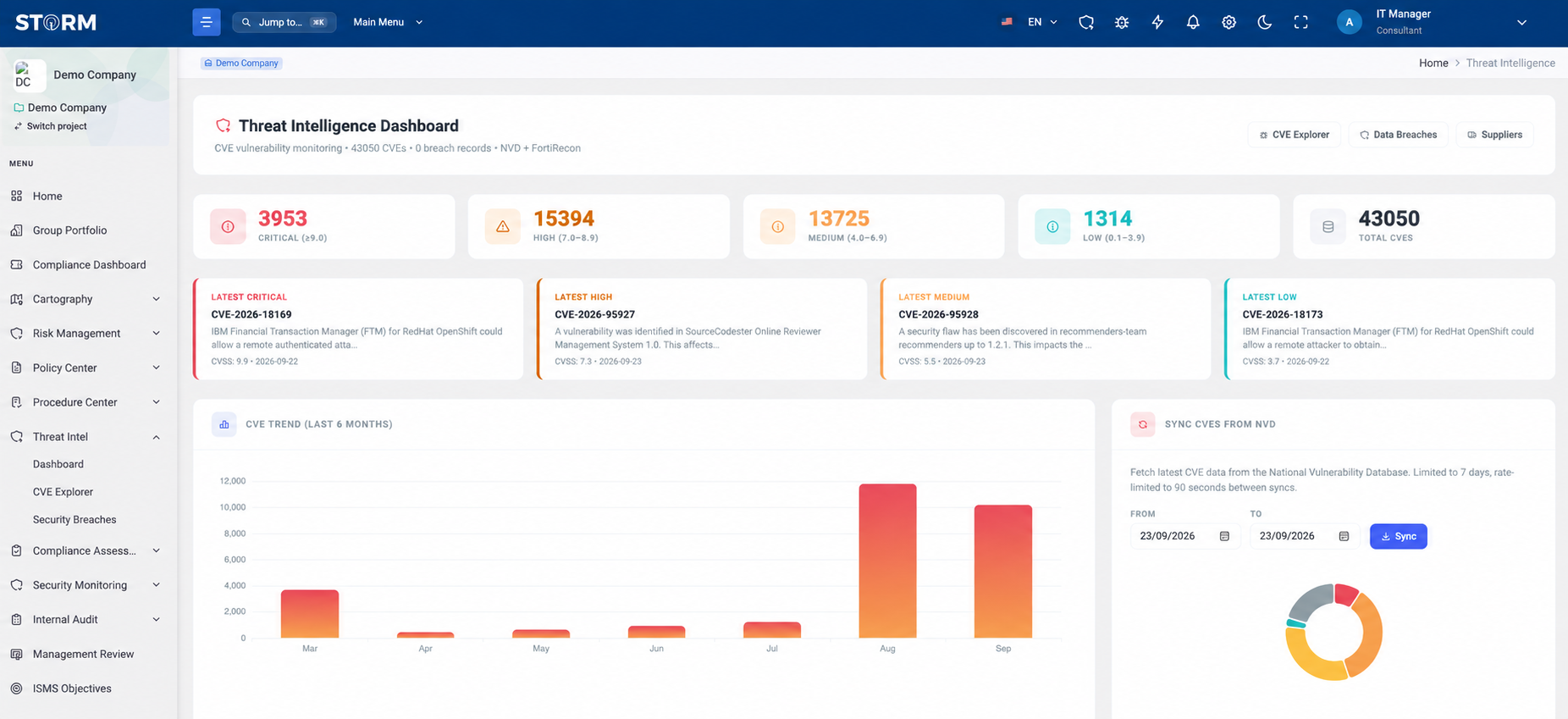
FortiRecon threat intelligence, CVE tracking and DNS monitoring give security and governance teams specific operational context for prioritization and follow-up.
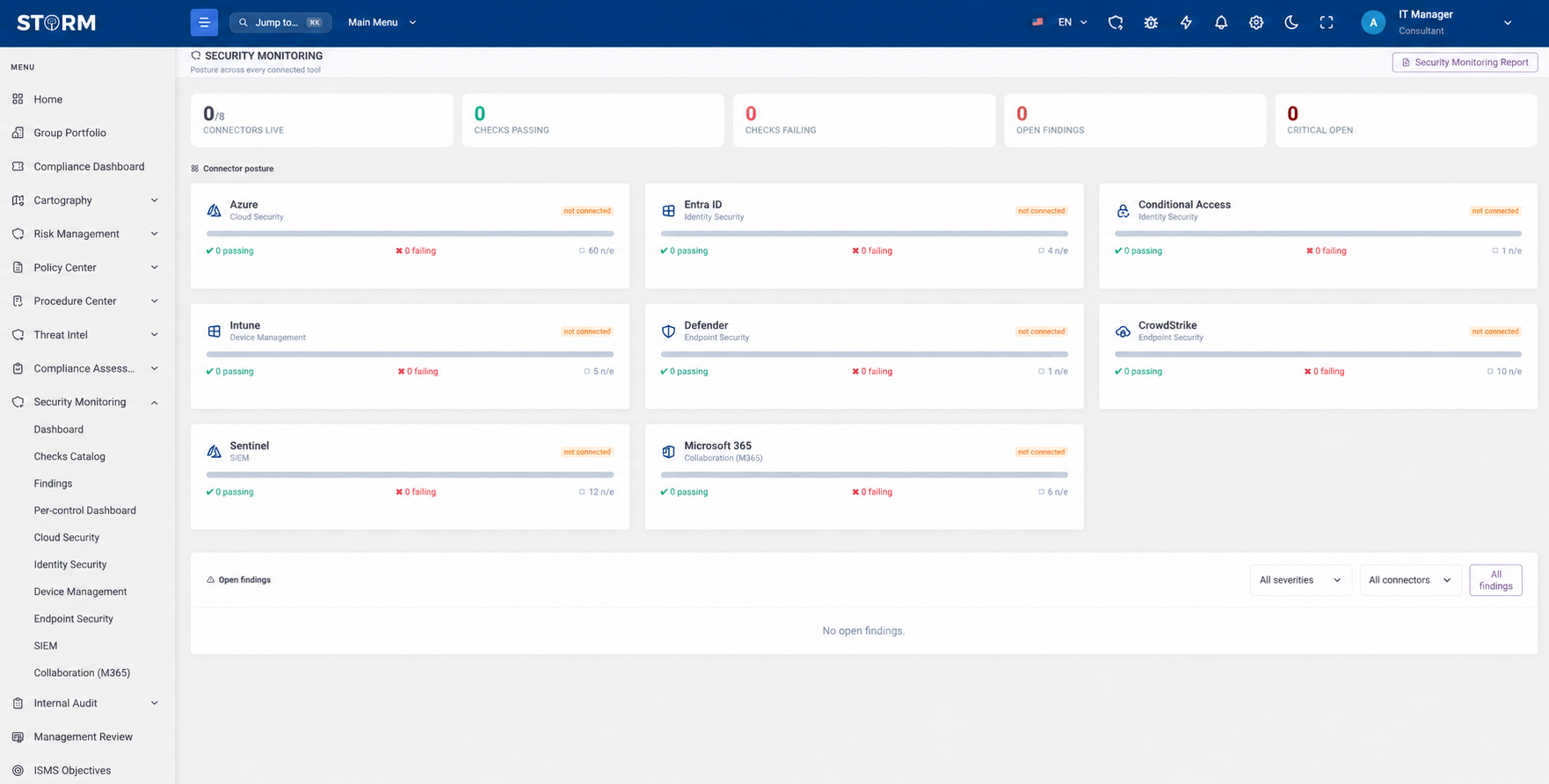
Supported MDM and EDR integrations can pre-populate endpoint posture, configuration state and asset attributes. Findings and remediation tasks then move through the connected governance workflow.
Bring your actual assets, risk process, threat sources, phishing program, evidence workflows, reports and deployment constraints to the STORM demonstration.
Use a 30-minute session to test STORM against your assets, risks, security tools, maritime operations, reporting needs and deployment constraints.