Set direction
Establish context, strategy, roles, policy, oversight and cybersecurity supply-chain risk management.
GV.OC · GV.RM · GV.RR · GV.PO · GV.OV · GV.SCConnect governance, assets, risks, safeguards, suppliers, vulnerabilities, monitoring, incidents and recovery in one operational record built around the outcomes your organisation prioritises.
The NIST CSF is flexible, outcome-based guidance—not a prescriptive control checklist or a product certification. Scope, priorities and target outcomes remain organisation-specific.
The Core organises high-level cybersecurity outcomes into six Functions. They are intended to operate together, not as a linear project or a one-time checklist.
Establish context, strategy, roles, policy, oversight and cybersecurity supply-chain risk management.
GV.OC · GV.RM · GV.RR · GV.PO · GV.OV · GV.SCKnow assets and risks and use lessons from evaluations, tests and operations to improve.
ID.AM · ID.RA · ID.IMManage access, awareness, data security, platform security and infrastructure resilience.
PR.AA · PR.AT · PR.DS · PR.PS · PR.IRContinuously monitor relevant environments and analyse events for signs of cybersecurity incidents.
DE.CM · DE.AEManage, analyse, communicate and mitigate detected cybersecurity incidents.
RS.MA · RS.AN · RS.CO · RS.MIExecute recovery activities and communicate restoration status with relevant stakeholders.
RC.RP · RC.COSTORM's documented framework catalogue includes NIST CSF and connects assessment work with the operational registers, owners, evidence and actions that support cybersecurity risk decisions.
Connect roles, controlled policies, measurable objectives, supplier oversight, risks, incidents and decisions through management-review records.
Policies · ownership · reviewModel services, data, systems, people, locations and suppliers, then assess impact, threats, vulnerabilities and risk with accountable owners.
Cartography · risk assessmentSelect technical, organisational and physical countermeasures, assign mitigation actions and keep supporting policies and procedures controlled.
Risk treatment · documentationBring threat intelligence, vulnerability findings and supported Microsoft security-configuration checks into dashboards and tracked remediation workflows.
Threat intel · vulnerabilities · monitoringRecord affected services and assets, ownership, impact, threats, root cause, reporting context, resolution dates and corrective actions.
Incidents · analysis · actionMaintain BCP and DRP documentation, BIA and recovery targets, and connect incidents and findings to corrective and management actions.
BCP · DRP · lessons learned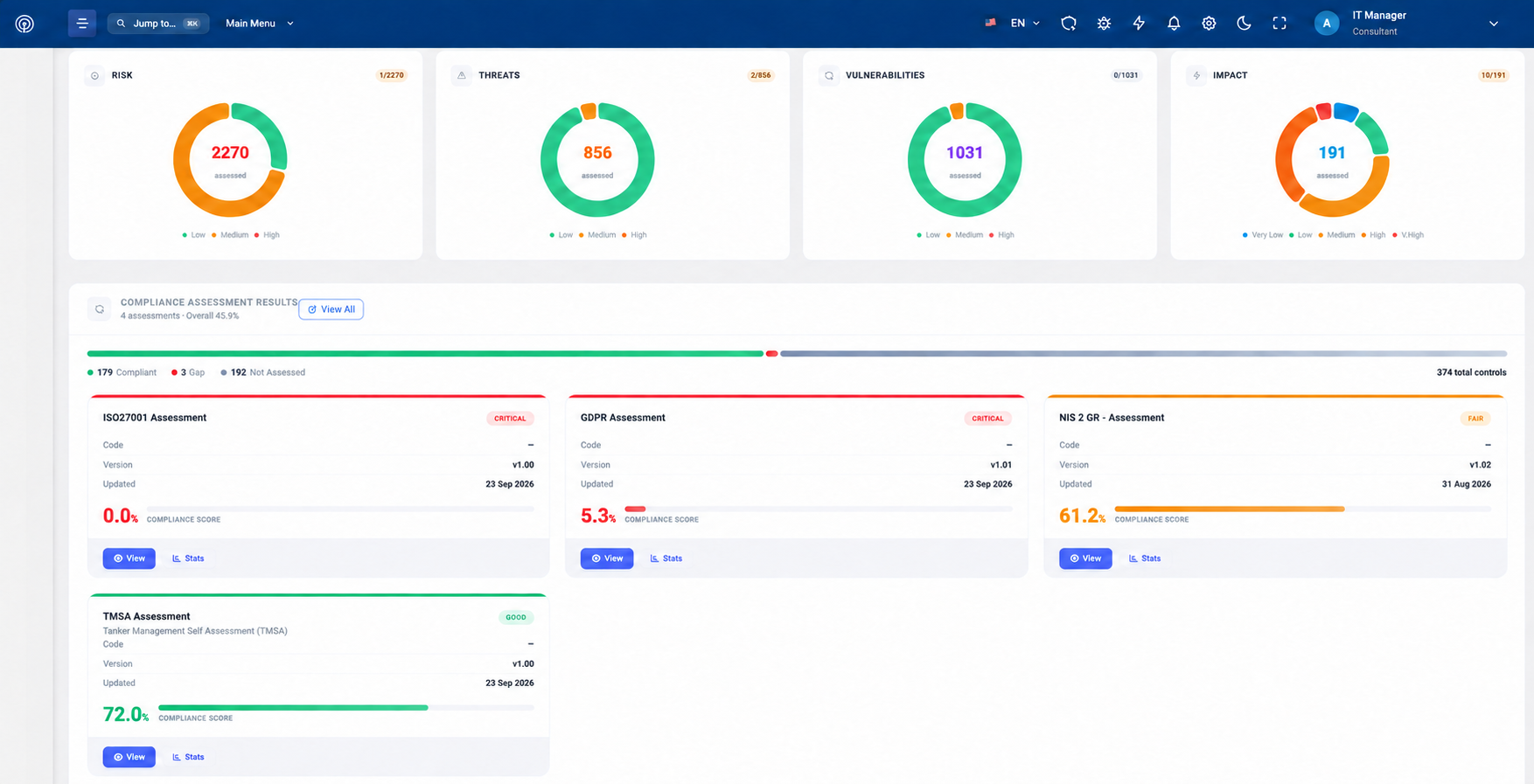
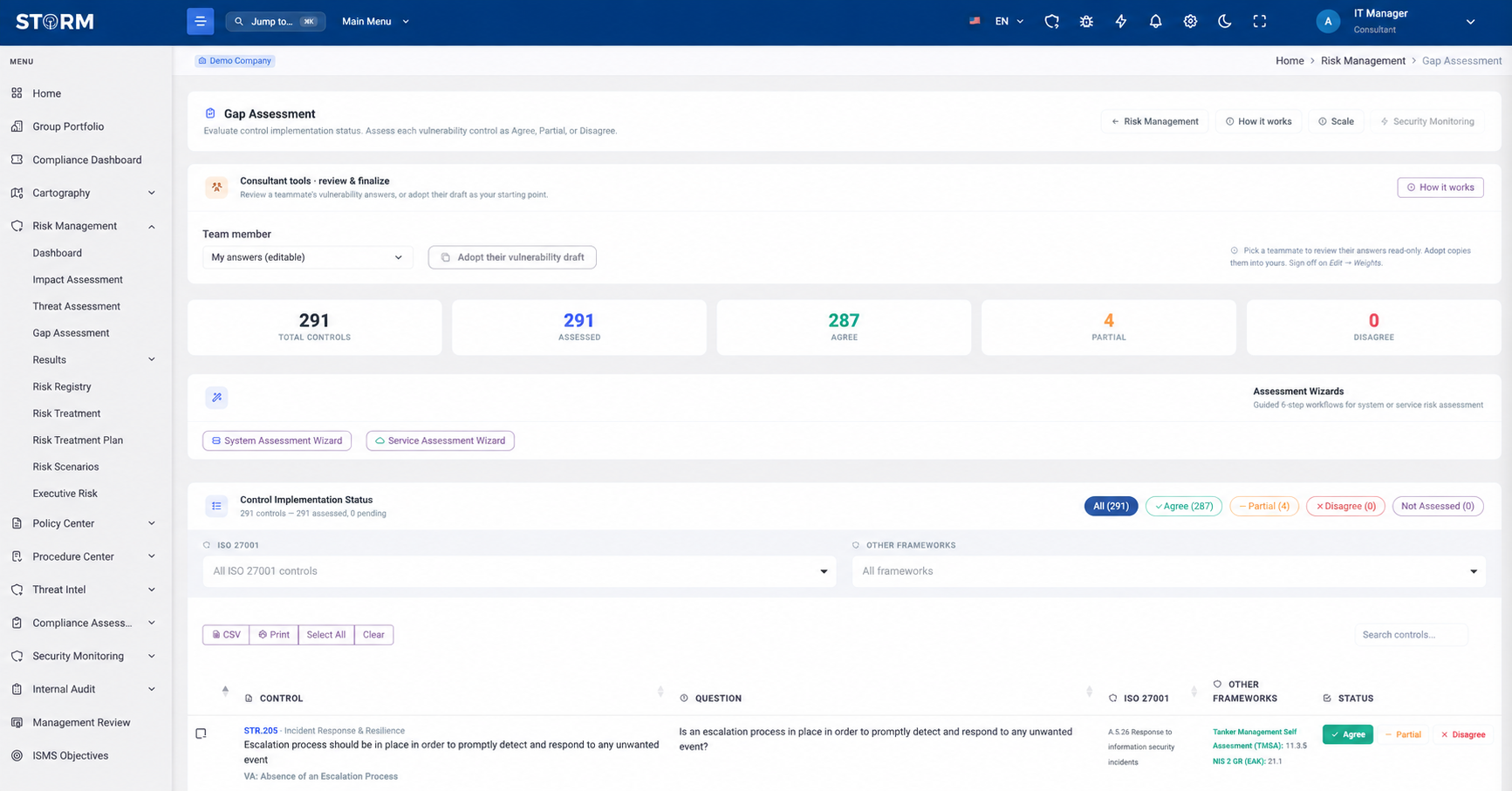
Use NIST assessments within STORM to record implementation status, evidence and gaps. Category reporting and period comparisons help teams understand where the current posture differs from the outcomes they prioritise.
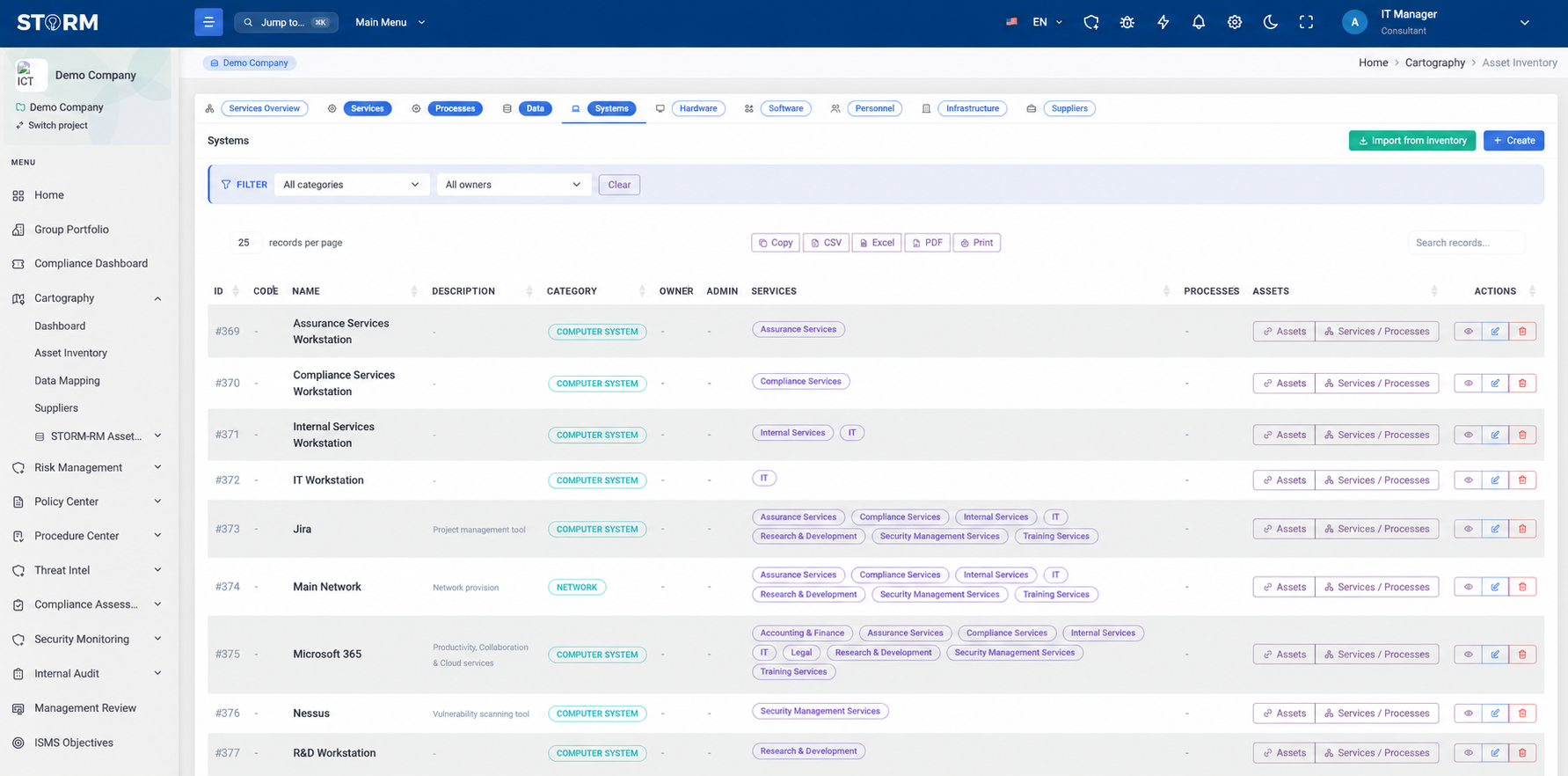
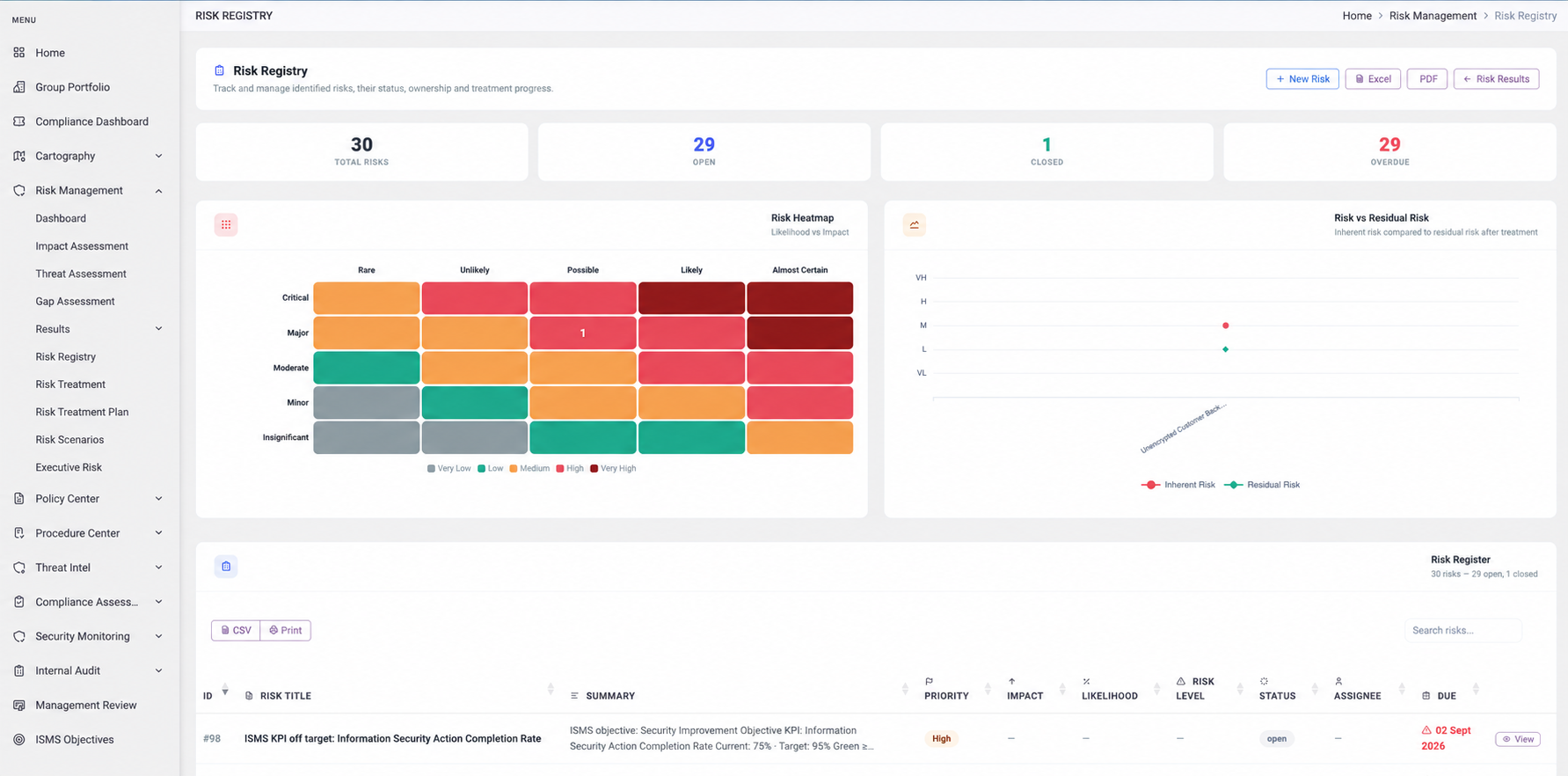
Cartography and the risk register connect outcomes to the technology, business services, suppliers and risk decisions they affect, giving owners a shared context for prioritisation.
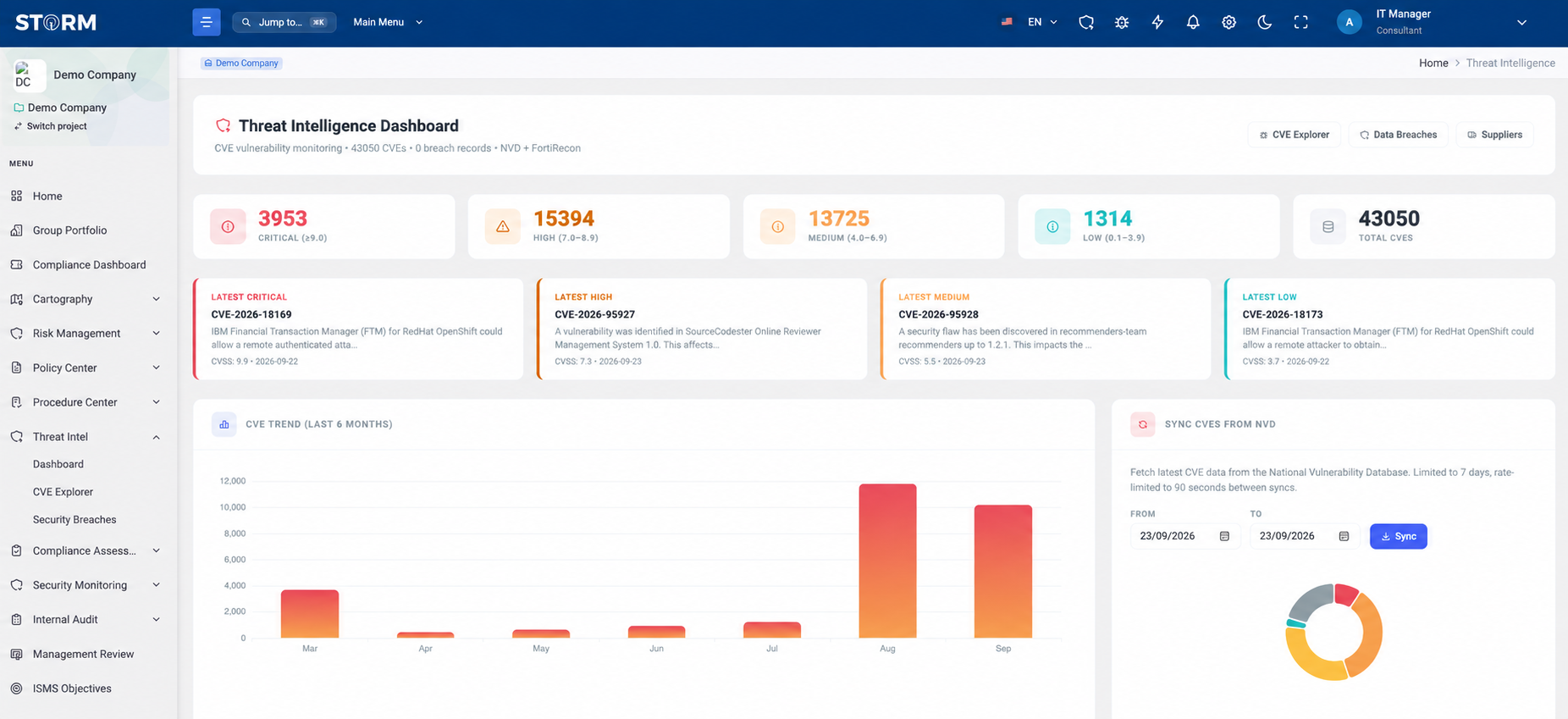
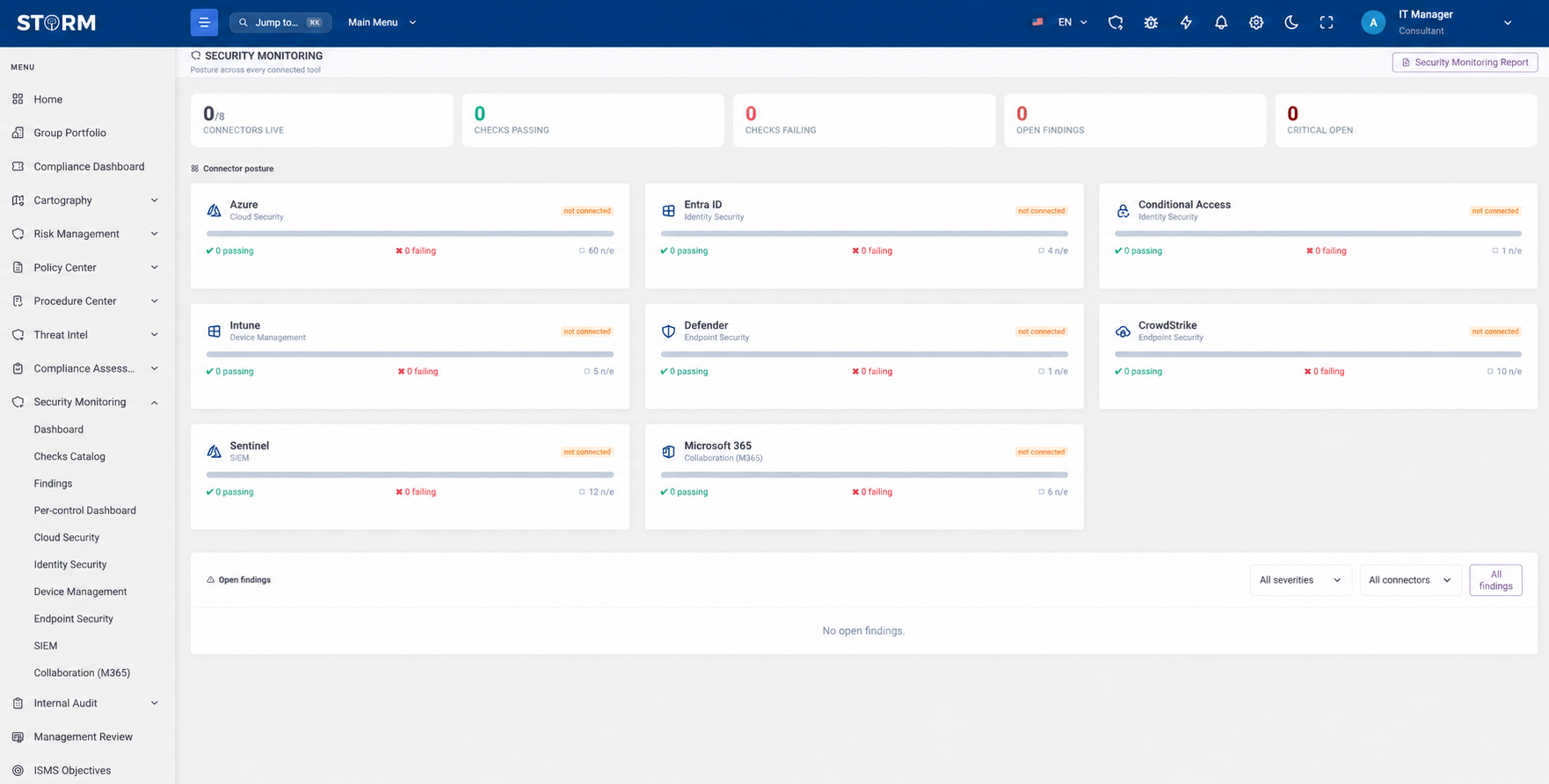
Threat intelligence, technical vulnerability management and supported configuration monitoring give teams operational inputs they can relate to assets, controls, assessments and remediation.
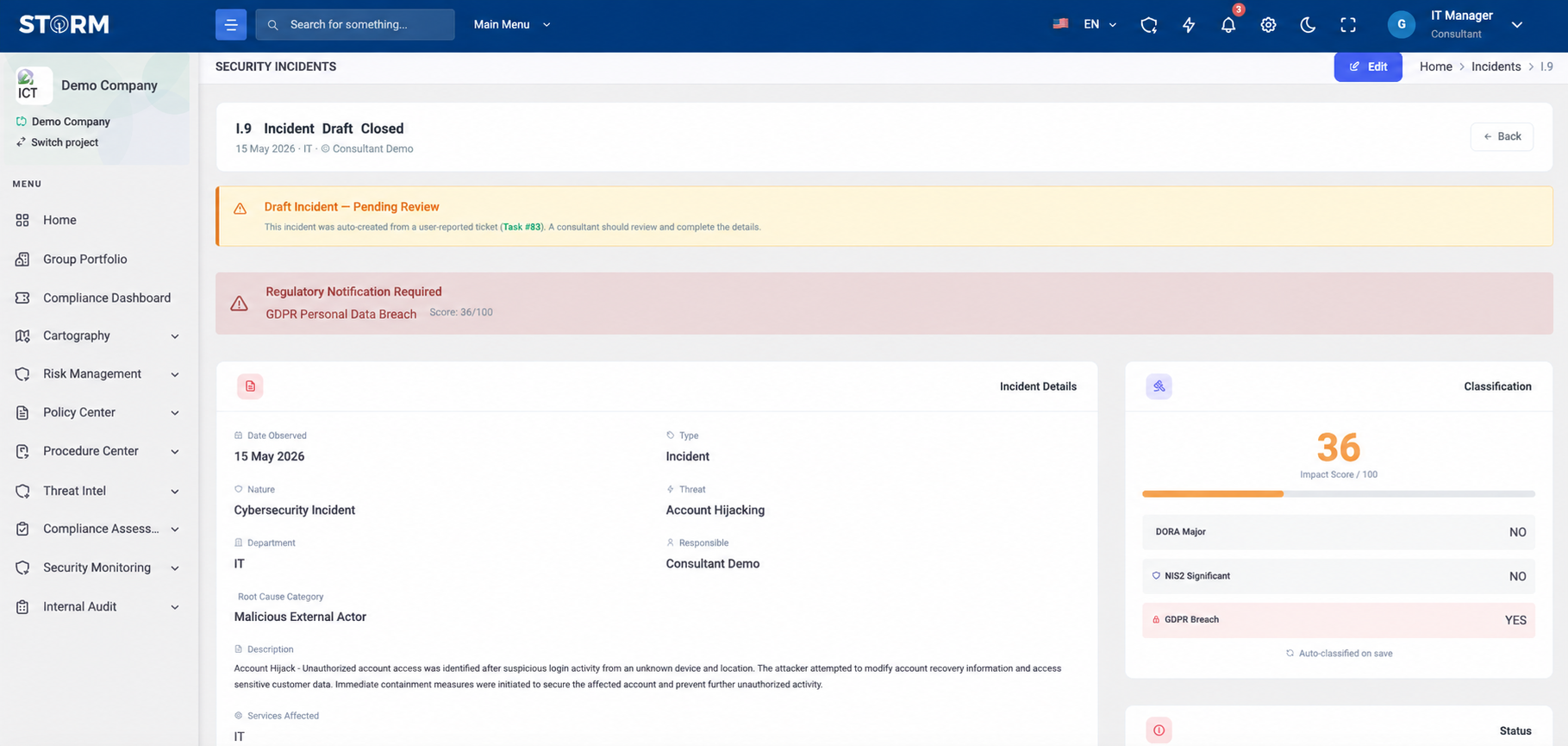
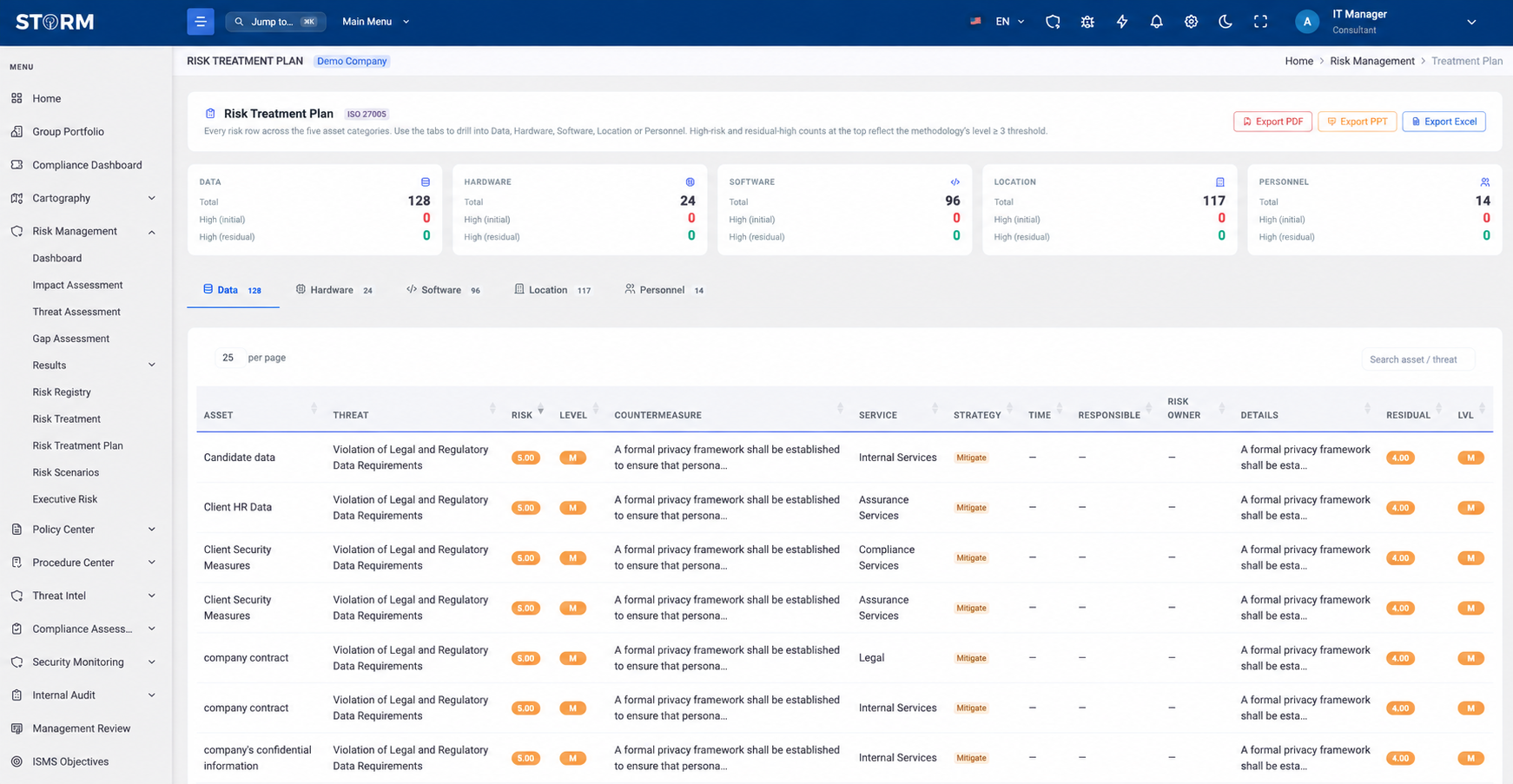
Incident records link affected services and assets with responsibility, analysis and corrective action. Treatment and continuity records retain the follow-through needed for recovery and improvement.
CSF 2.0 gives organisations several connected tools for describing priorities and communicating cybersecurity risk. STORM can hold the related evidence and actions without turning the Framework into a generic checklist.
Organizational Profiles help compare current and target cybersecurity posture, expose gaps and prioritise an action plan that reflects business needs.
Outcomes · priorities · gapsTiers range from Partial to Adaptive and inform Profiles by describing cybersecurity risk governance and management characteristics. They are not maturity scores to maximise blindly.
Partial · Risk Informed · Repeatable · AdaptiveReferences connect CSF outcomes to standards, practices and controls that may help achieve them. A mapping is context—not proof that an outcome has been achieved.
Crosswalks · practices · controlsConfirm the NIST CSF version, Core content, selected Profile outcomes and mappings configured for your organisation before relying on an assessment or crosswalk.
Use STORM to retain decisions and evidence through a repeatable cybersecurity risk-management cycle.
Set organisational context, responsibilities, risk appetite and relevant services.
Govern · business contextRecord current outcomes and select target outcomes based on risk and priorities.
Current · targetEvaluate gaps, risks and dependencies and decide which actions matter first.
Gap · risk · ownerImplement safeguards, monitor exposure and manage incidents and recovery.
Protect · detect · respond · recoverReview results, reassess outcomes and track decisions to accountable action.
Evidence · review · improvementThe CSF describes outcomes and a common language. Each organisation decides how to apply it and what evidence demonstrates progress.
Use a focused walkthrough to test STORM against your organisational context, Profiles, risks, suppliers, safeguards, monitoring sources, incidents, recovery workflow and evidence needs.