Govern the use
- Define requirements and acceptable use
- Assess service and provider risk
- Operate customer-side controls
Connect cloud services, customer and provider responsibilities, risks, policies, supplier evidence, technical signals and remediation in one governed operating view.
STORM's supplied technical description lists ISO/IEC 27017 among its supported standards but does not identify the edition. Confirm that assessment content and mappings match the current 2026 edition before relying on them.
ISO/IEC 27017:2026 adds cloud-specific guidance and controls for organisations that provide or use cloud services. Selection remains driven by risk and applicable legal, regulatory, contractual and cloud-specific requirements.
Record which safeguards belong to the customer, the provider or both so responsibility gaps become reviewable.
Identify relevant services, data, dependencies, users, providers and deployment models before evaluating controls.
Apply cloud guidance according to assessed risk rather than treating every service and relationship as identical.
Connect control ownership and evidence expectations to provider commitments and relevant contractual obligations.
Keep operational control status, security events and remediation visible across organisational boundaries.
Review implementation and supporting evidence instead of relying only on generic provider assurances.
Reassess responsibilities and risk when services, architectures, providers or business use materially change.
Use ISO/IEC 27017 alongside ISO/IEC 27002 guidance and the organisation's wider information-security approach.
The STORM technical description supports strong cloud-governance claims, but it does not establish that every control and automated check has already been updated for ISO/IEC 27017:2026.
The platform combines assessments with the assets, providers, risks, policies, evidence and actions that determine whether cloud controls operate beyond a questionnaire.
Run internal assessments and supplier questionnaires, record implementation status, identify unanswered controls and maintain remediation progress.
Compliance Assessment · Supplier PortalUse Cartography to relate business services, data, software, infrastructure, users and providers so cloud scope is grounded in operations.
Cartography · asset modelMaintain cloud-use policies, procedures and governance documents with versions, approvals, reviews, acknowledgements and mappings.
Policy Center · lifecycleCombine configurable supplier criteria with custom risks, controls, treatment strategies, owners, dates, attachments and mitigation actions.
TPRM · Risk RegistryCollect supported configuration data from Microsoft Entra ID, Intune, Defender, Azure, Sentinel and Microsoft 365 to generate applicable evidence.
Microsoft Graph · Security MonitoringPlan internal audits, retain findings, connect corrective actions and bring risk, supplier, incident and compliance inputs into management review.
Audit · actions · management review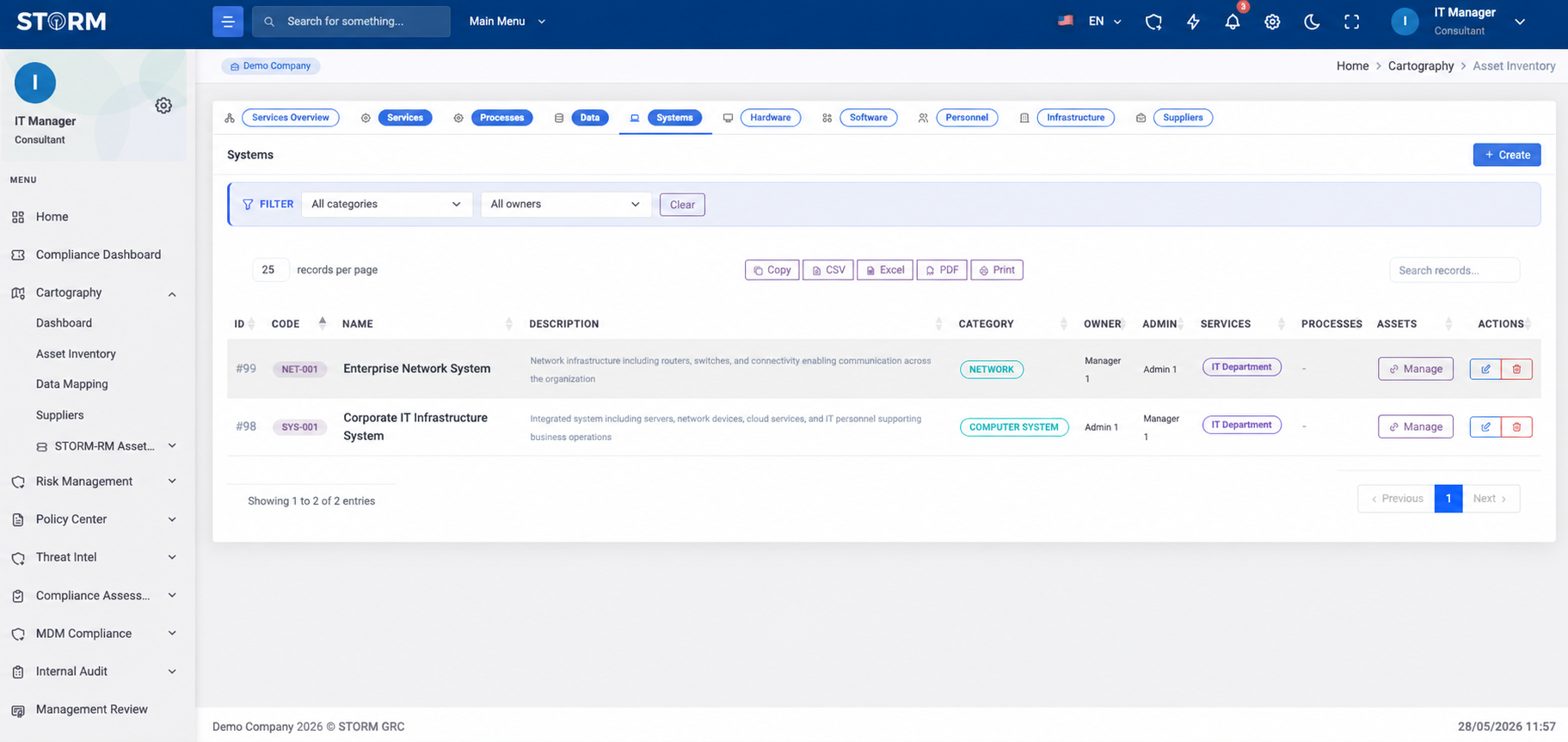
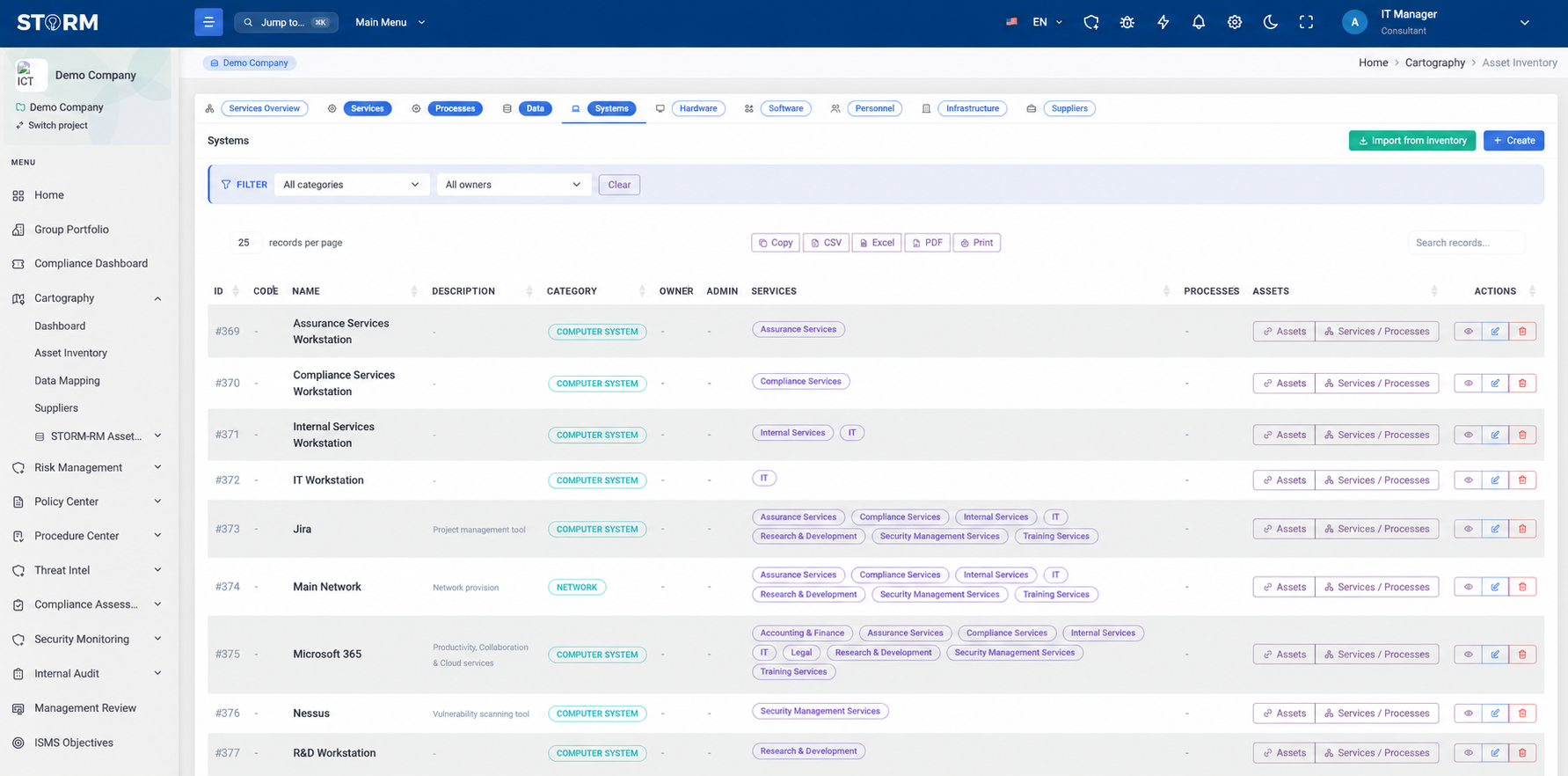
Build cloud governance on a connected operating model instead of a detached list of provider names. Cartography shows how services, information, software, infrastructure, users and third parties relate.
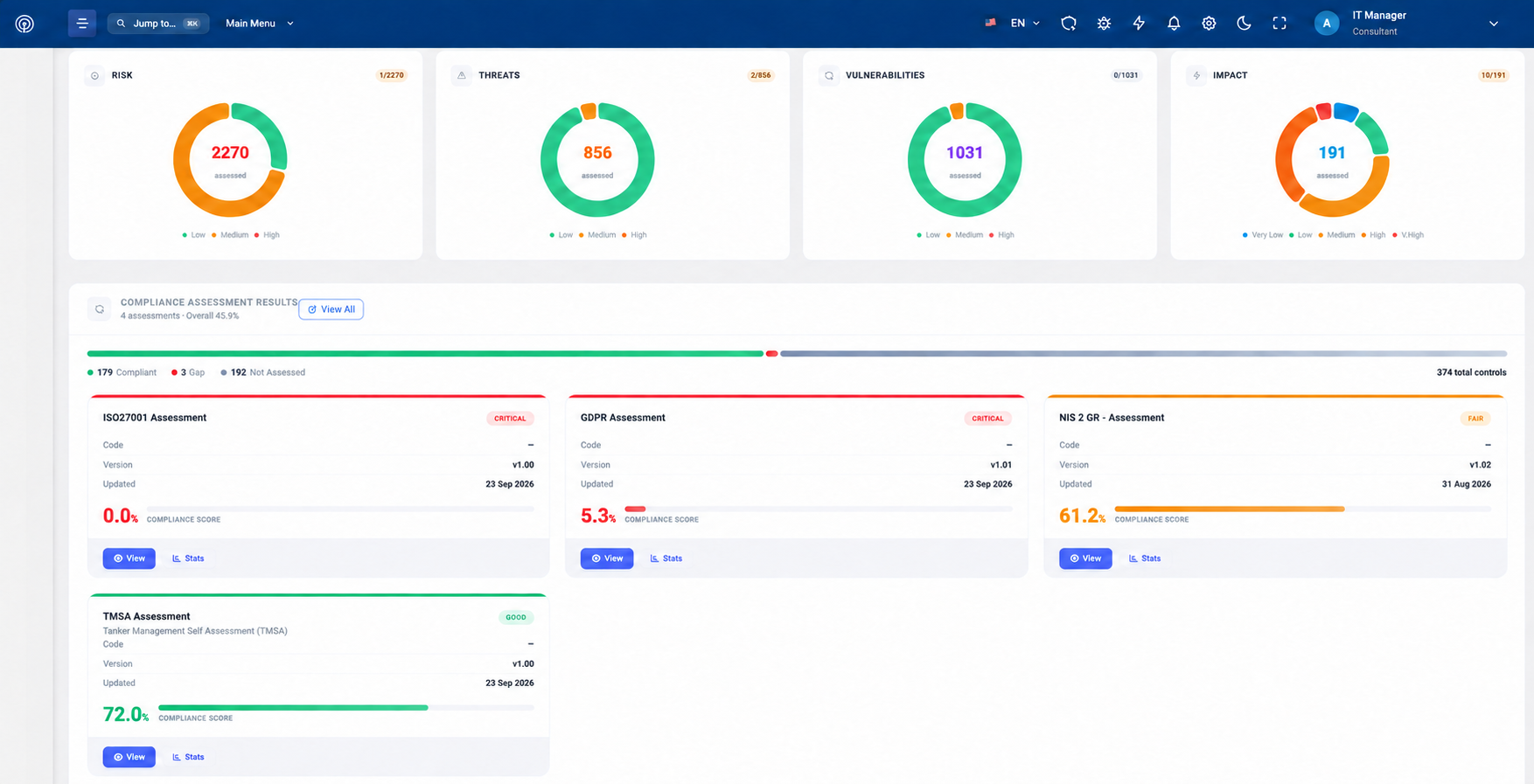
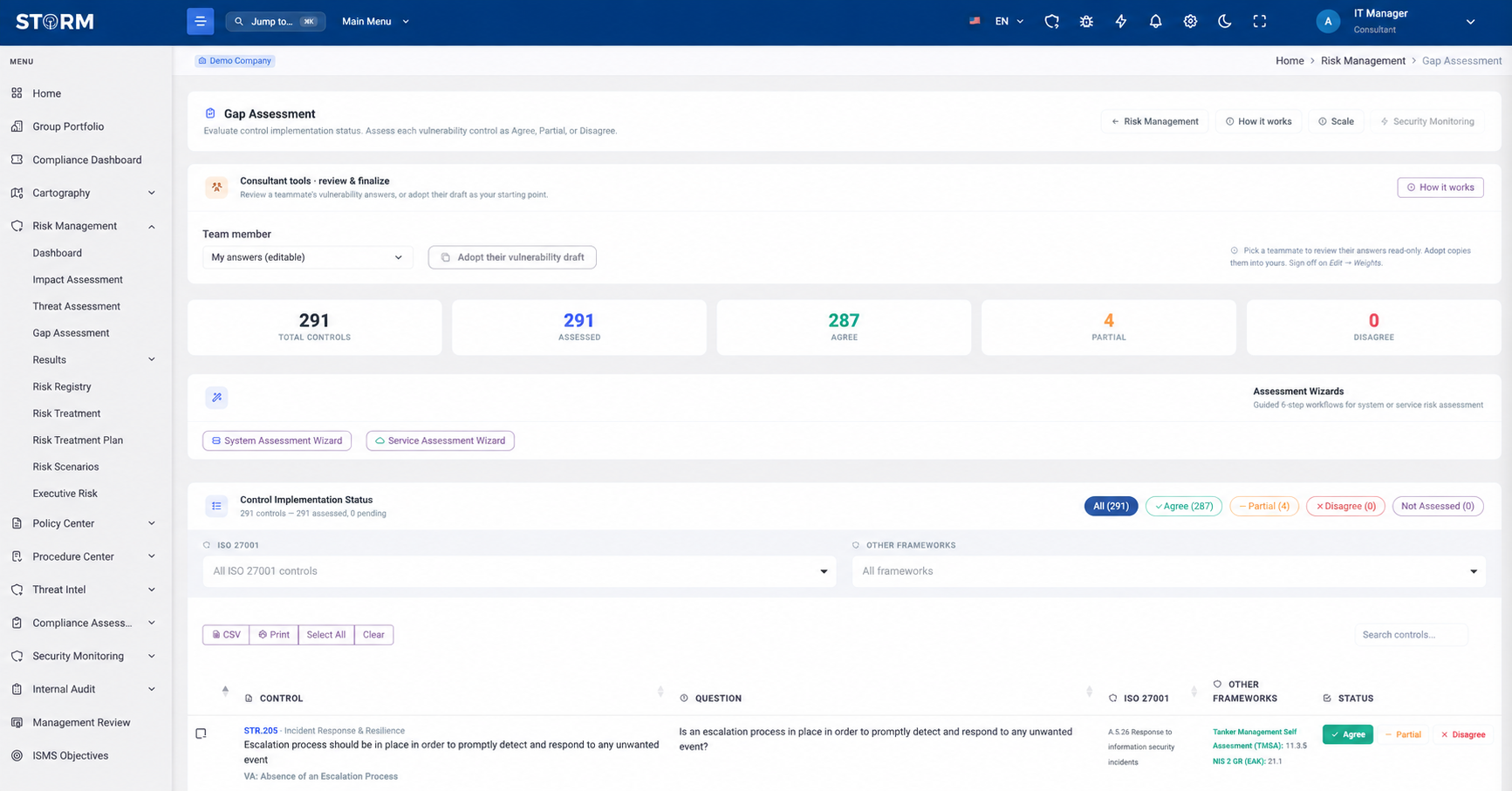
STORM documents ISO/IEC 27017 support across compliance, internal-audit and third-party workflows. Assessment results can feed gap actions and custom risks so weaknesses have owners and target dates.
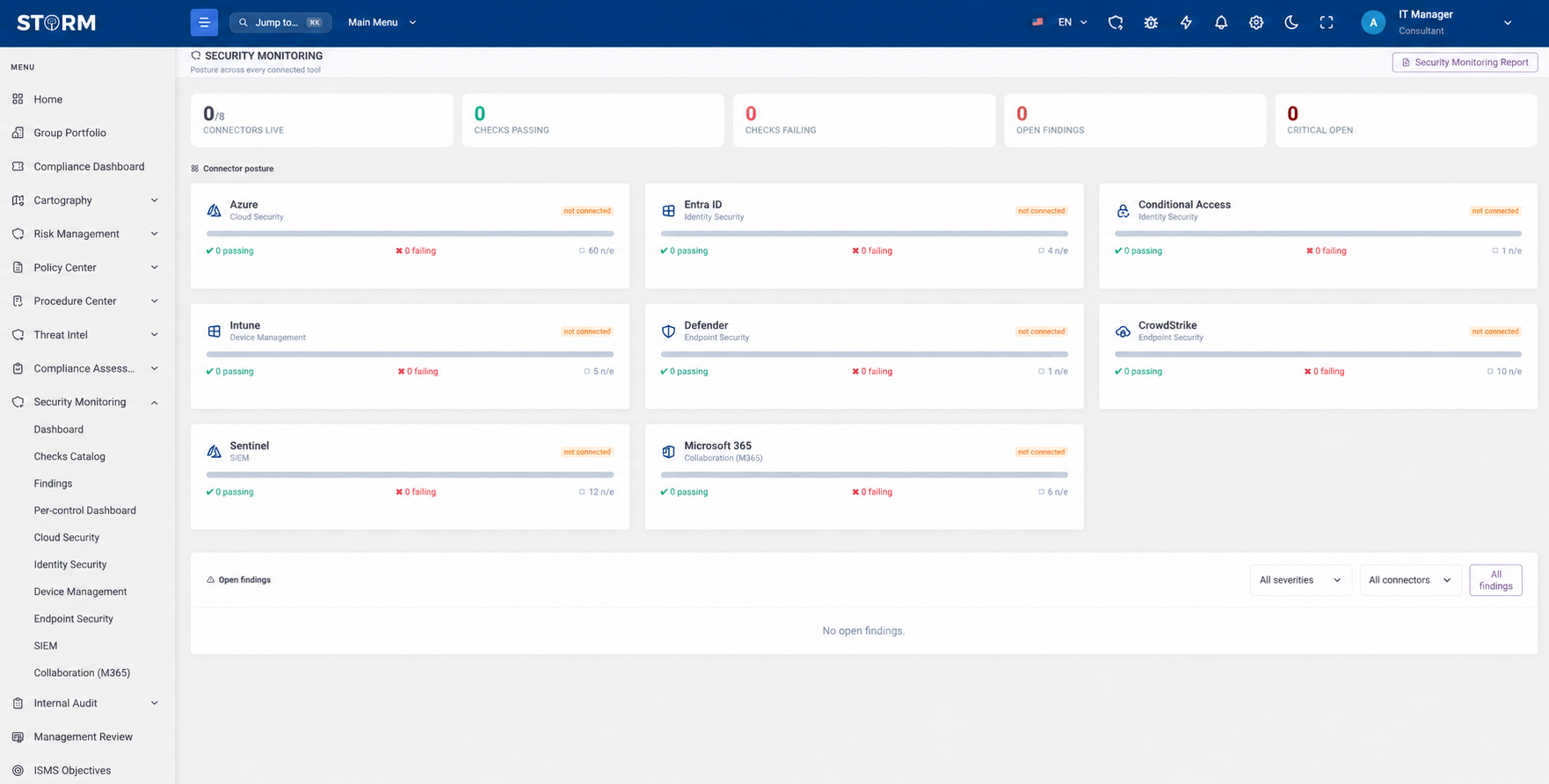
Security Monitoring continuously validates supported Microsoft cloud configurations and can pre-populate applicable compliance responses. It is evidence input—not proof that every ISO/IEC 27017 responsibility is fulfilled.
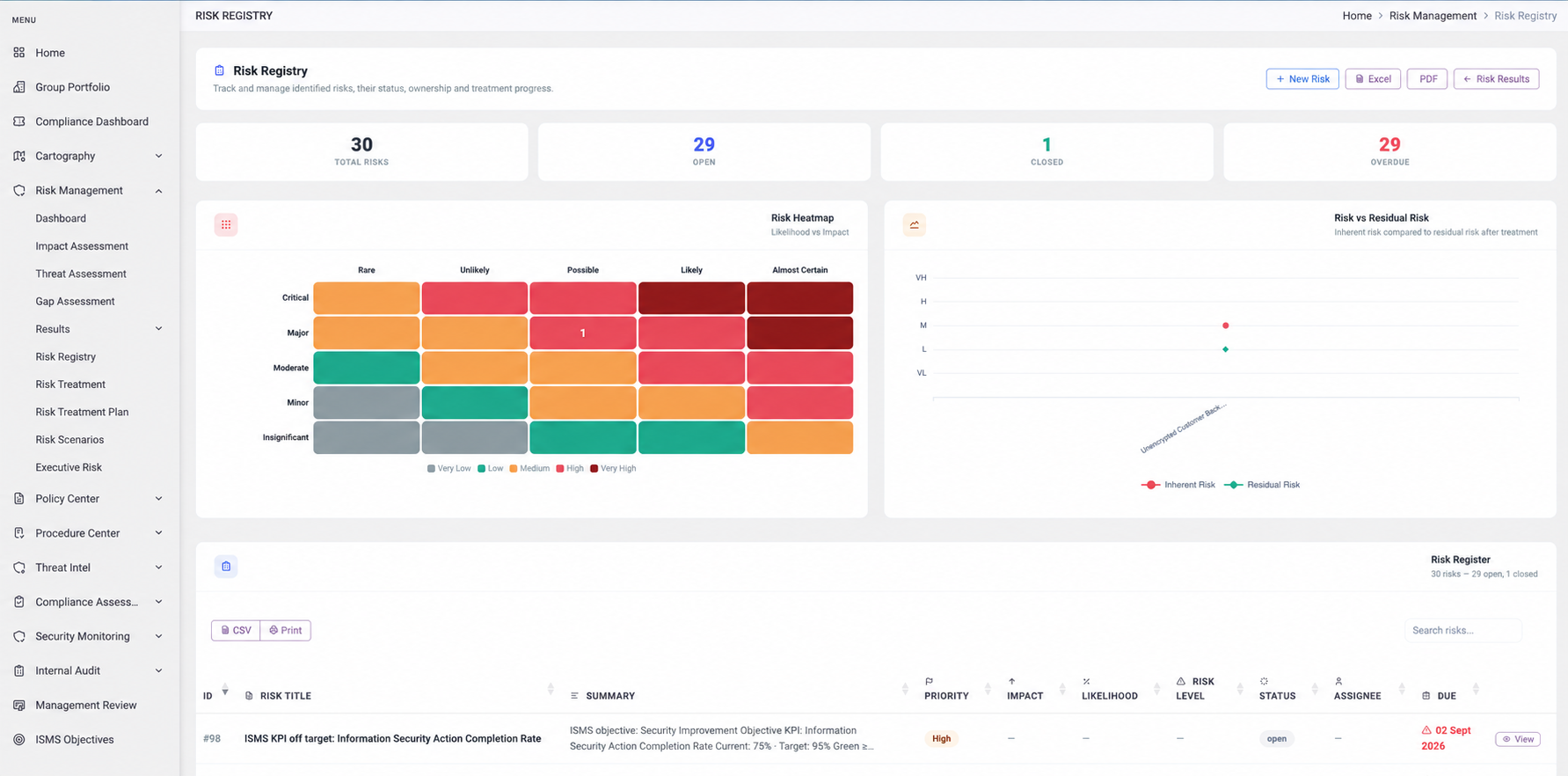
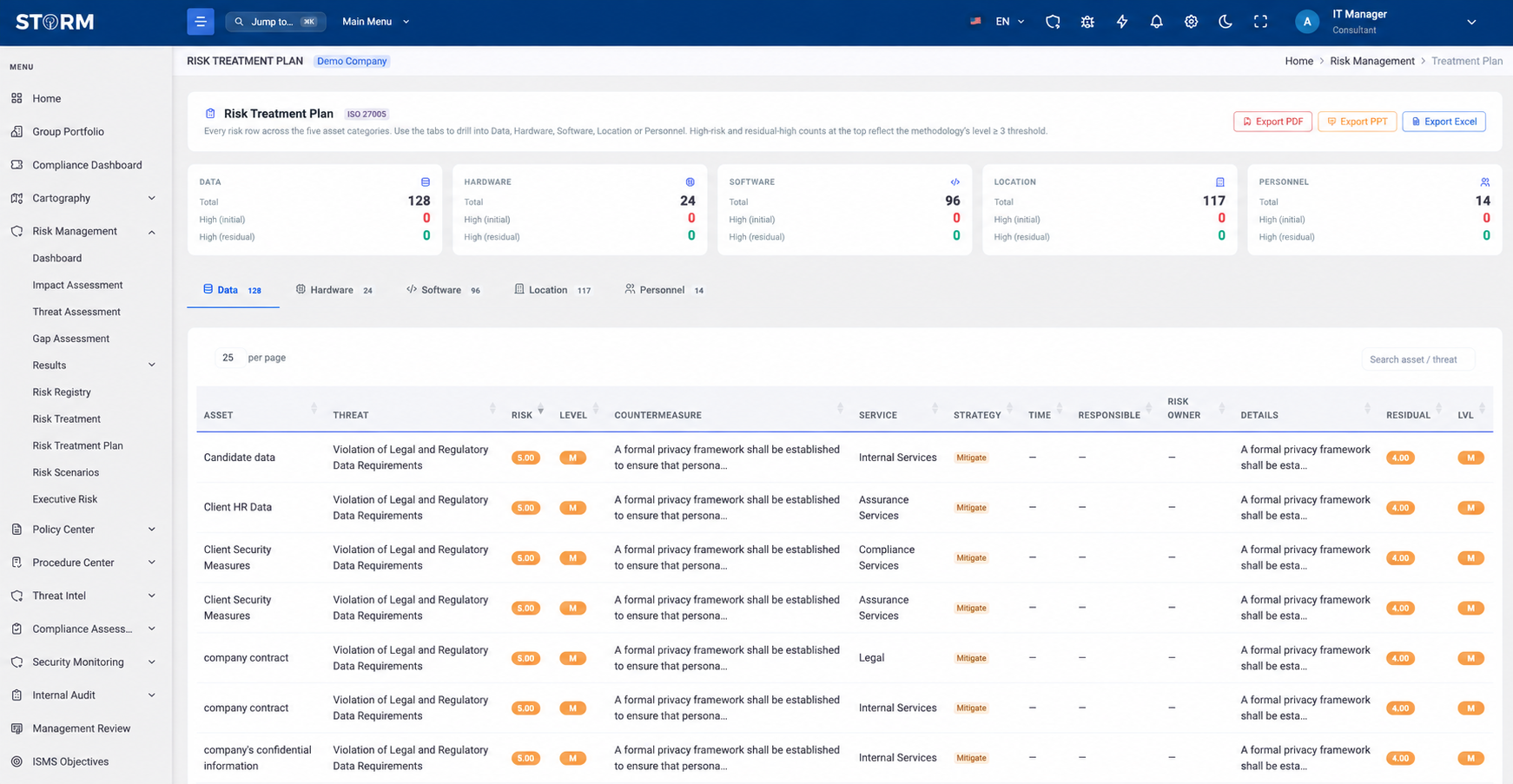
Use the Risk Registry and treatment workflow for cloud risks arising from services, control gaps or supplier assessments, while preserving the reason, selected response and supporting evidence.
These themes help organise a review; they do not reproduce or replace the licensed ISO/IEC 27017:2026 control text.
Identify who implements, operates, monitors and evidences each relevant safeguard.
Customer · provider · sharedMaintain the services, deployment models, data, interfaces, users and supporting dependencies in scope.
Scope · assets · relationshipsEvaluate provider evidence and contractual commitments against the organisation's actual risk and requirements.
Due diligence · evidenceReview the customer and provider activities that protect privileged and ordinary access to cloud capabilities.
Roles · access · oversightTrack approved settings, technical checks, exceptions and changes that can affect the control boundary.
Baseline · monitoring · changeMake detection, communication, response ownership and corrective actions clear across the relationship.
Signals · escalation · responseConnect information handling, resilience expectations and recovery dependencies to accountable controls.
Protection · recovery · evidenceReview residual risk, remediation and service transitions as cloud use and providers change.
Action · transition · reviewUse the licensed standard and qualified interpretation to determine exact applicability. STORM supports the governance workflow; technical and contractual controls remain the responsibility of the relevant customer and provider teams.
A useful assessment connects every response to scope, ownership, risk, evidence and action.
Identify services, data, providers, deployment models and business dependencies.
Cartography · scopeClarify customer, provider and shared control responsibilities.
Ownership · agreementEvaluate implementation and risk using the confirmed 2026 requirement set.
Controls · risk · evidenceMonitor supported signals and manage gaps, risks and supplier remediation.
Checks · actions · datesAudit evidence, review changes and retain management decisions.
Audit · review · improveThe strongest implementation separates standard guidance, product workflow, technical control operation and independent assurance.
Review your services, providers, shared responsibilities, assessment edition, Microsoft evidence sources, risk method and remediation workflow in a focused STORM walkthrough.