01 · GovernanceP1
Performance
HSSE commitment, governing documents, objectives and KPIs, audit close-out, Master’s reviews and company evaluation.
Connect fleet context, procedures, operational and cyber risks, evidence, findings and actions around DryBMS readiness—without reducing improvement work to a periodic questionnaire.
The supplied STORM technical description does not list DryBMS as a current built-in framework. Official questionnaire content, level scoring and DBCE submission must be confirmed and configured separately.
The DBCE guidance groups the self-assessment into four categories. Together they cover the management system, the people who operate it, the physical fleet and the processes used to control work.
HSSE commitment, governing documents, objectives and KPIs, audit close-out, Master’s reviews and company evaluation.
Shore and crew recruitment, competence, training, familiarisation, contractor management and crew welfare.
Maintenance, dry dock and surveys, critical equipment, engine-room operations, bunkering and inspection close-out.
Shipboard operations, risk, permits, change, environment, security, cyber, emergency planning and incident learning.
The technical description documents configurable assessments and broad governance workflows, but it does not name DryBMS among STORM’s current built-in frameworks.
Use documented STORM capabilities to organise evidence and improvement work. Apply the official DryBMS content and DBCE process separately when defining, scoring and submitting a self-assessment.
Model services, processes, locations, physical and ICT assets, people, data and external dependencies in a connected inventory.
Company · fleet context · assetsRun configured internal or supplier questionnaires, collect evidence, record status, compare periods and schedule reassessments.
Questions · evidence · reviewManage policies and procedures through authoring, versioning, approval, acknowledgement and scheduled-review workflows.
SMS support · lifecycle · trailRecord risks, controls, treatment choices, owners, review dates, mitigation plans and supporting attachments.
Risk register · treatment · close-outPlan internal audits, manage findings and bring risks, incidents, supplier results and actions into management reviews.
Assurance · decisions · follow-upTrack defined objectives and KPIs, while retaining security-incident ownership, root cause and corrective-action records.
Trends · lessons · improvement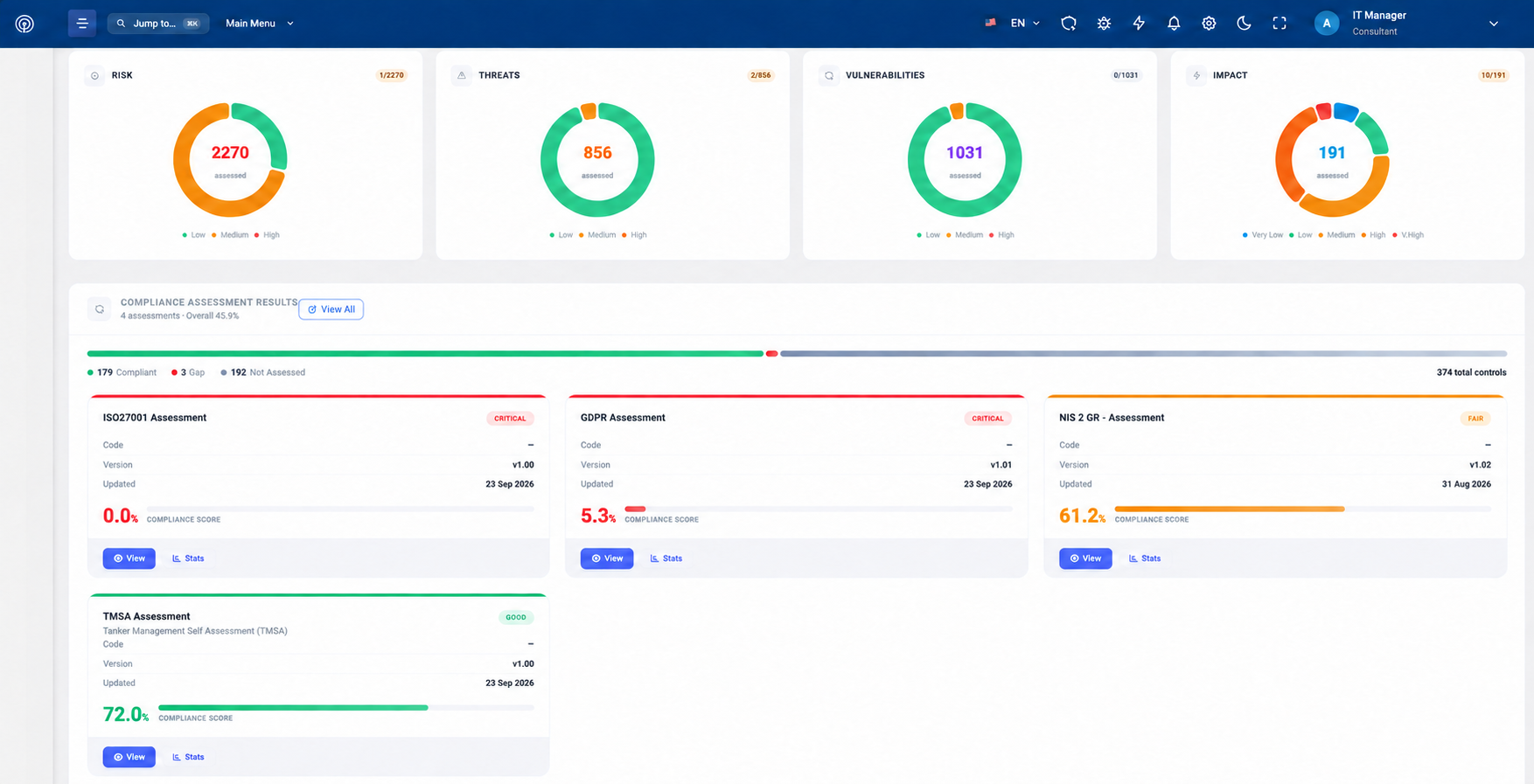
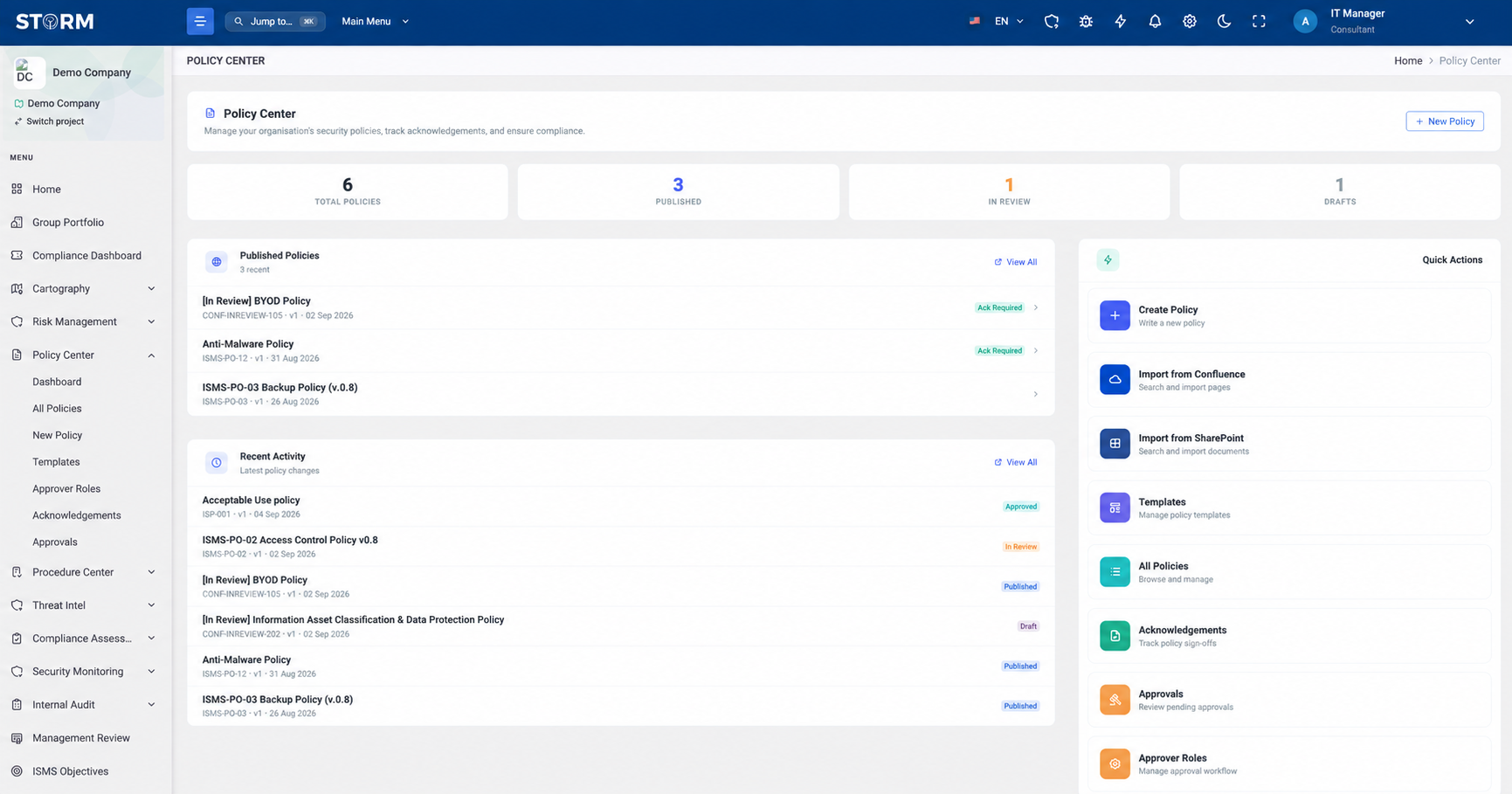
Configured questionnaires can sit alongside policy and procedure lifecycles, evidence, review schedules and implementation status. This supports a more durable record than an isolated spreadsheet while the official DryBMS criteria remain the source of truth.
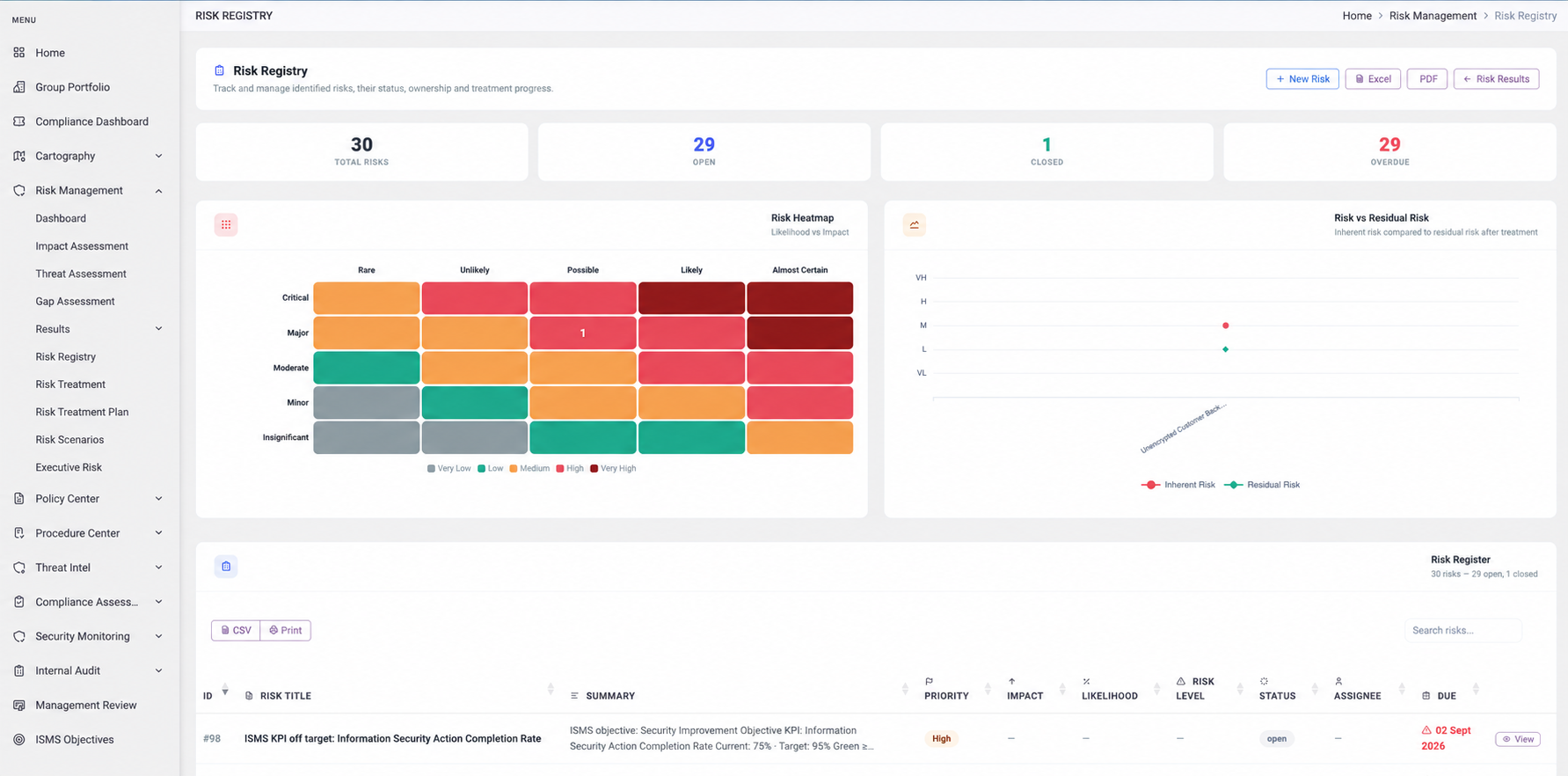
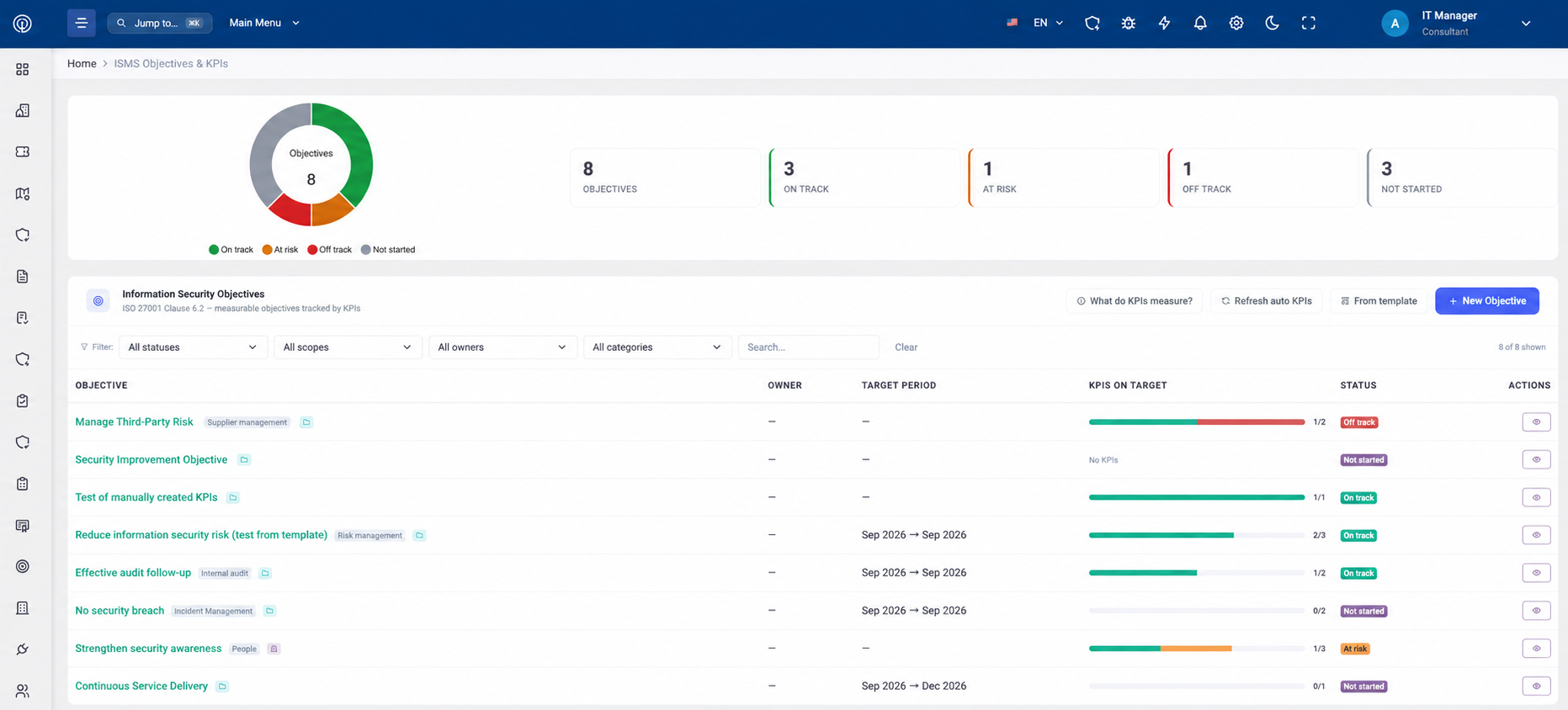
Record risks and treatment decisions with owners and dates, then track defined objectives and KPIs through dashboards and management reporting. Official DryBMS level and scoring conclusions still belong to the applicable DBCE assessment process.
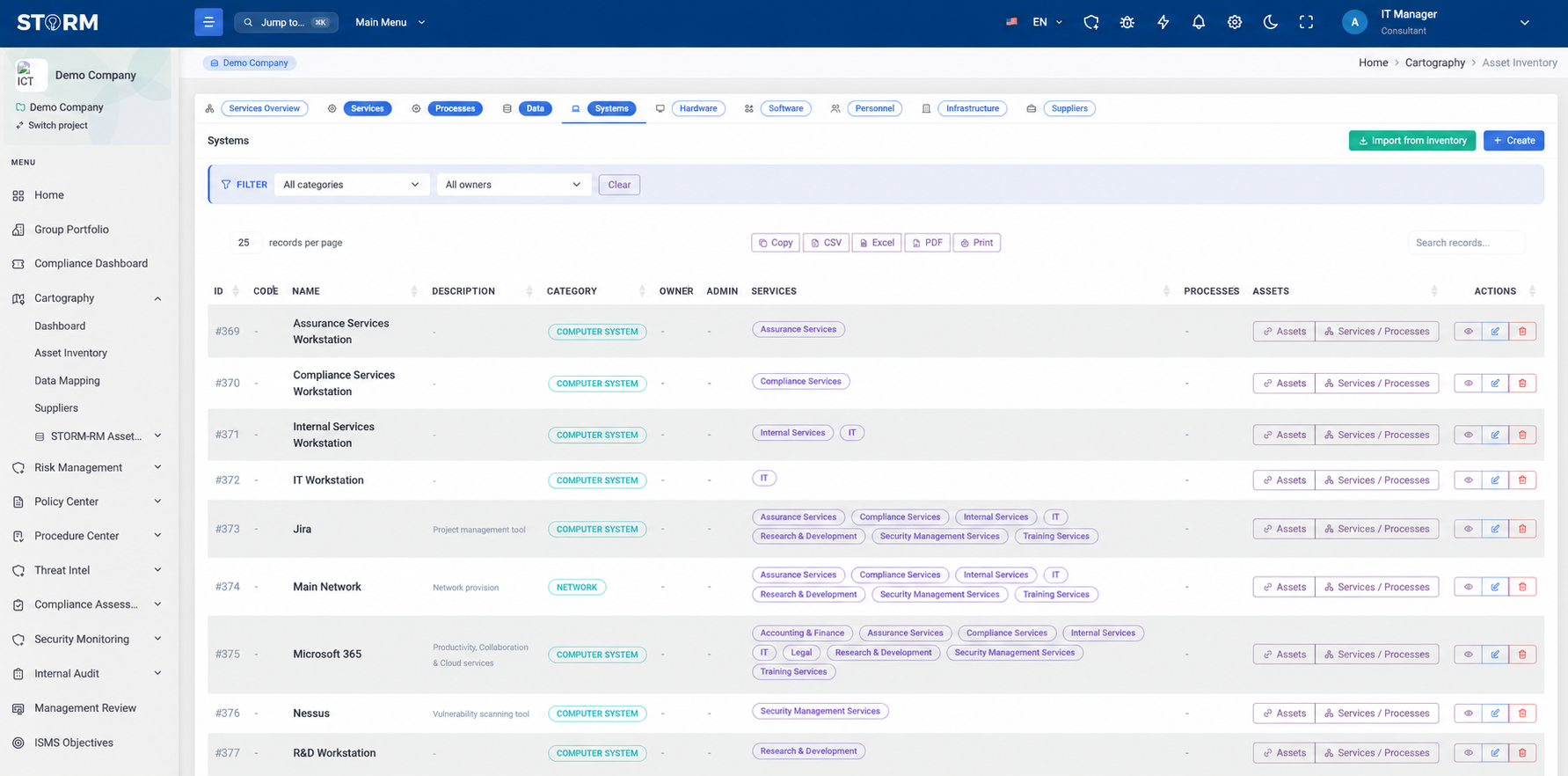
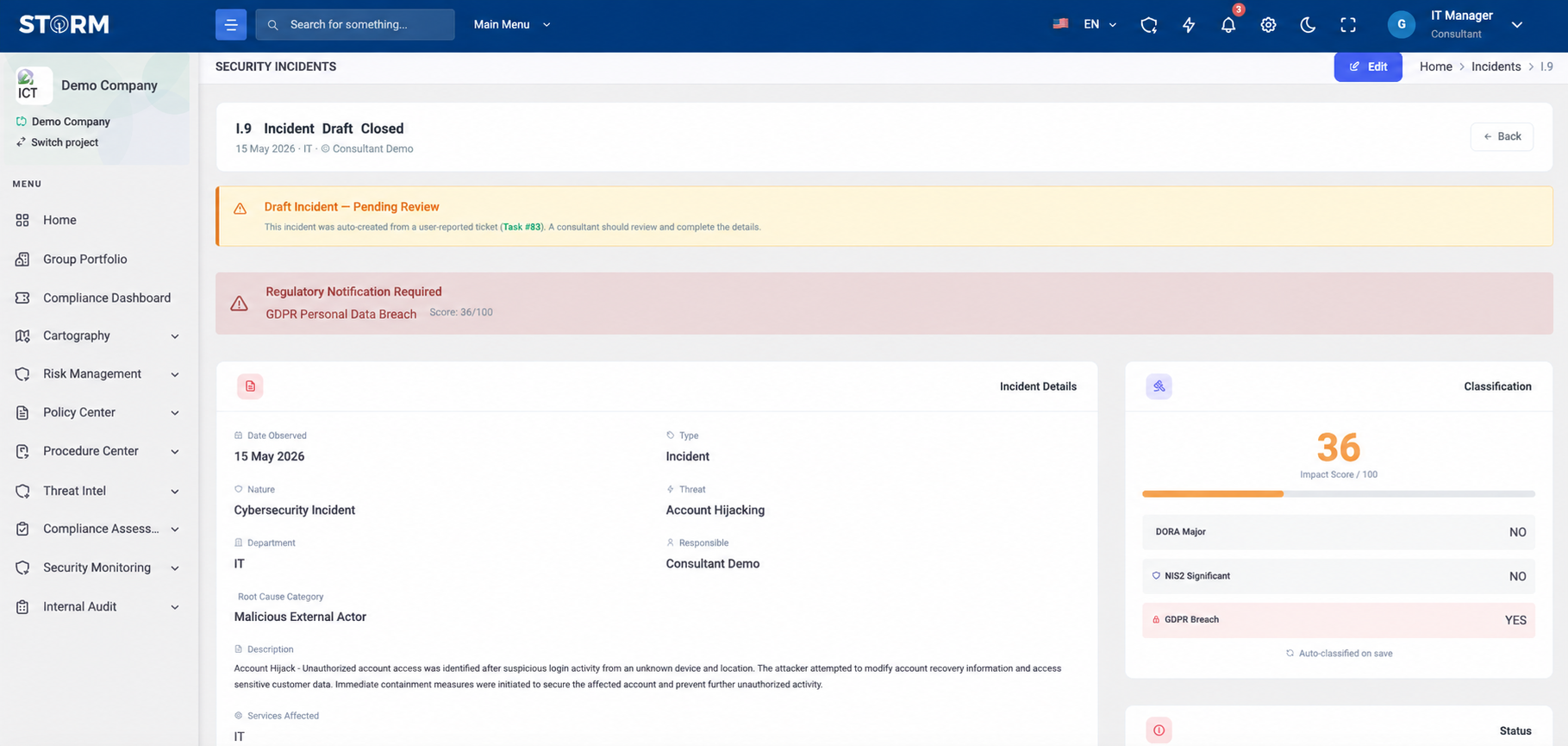
Cartography connects processes, services, assets and dependencies. Security incidents can reference affected assets, assigned personnel, root causes and corrective actions—useful evidence for relevant DryBMS subject areas, not a replacement for marine operational systems.
The official guidance describes increasing expectations for the comprehensiveness of the management system. These summaries are directional and do not replace the DryBMS questionnaire or scoring rules.
Starts with applicable IMO and flag-state obligations, clear HSSE requirements and awareness of relevant industry guidance.
Mandatory baselineAdds a defined continual-improvement approach and clearer treatment of relevant guidance within the safety management system.
Structured improvementExtends the system with lessons learned, emerging obligations and tools for managing indicators and developing HSSE risks.
Forward-looking controlEmphasises proactive use of leading indicators and systematic follow-through to close actions addressing HSSE risk.
Proactive assuranceAlways use the current official DryBMS materials to determine the applicable expectation, evidence and score.
STORM can organise supporting records; the official questionnaire, score and any submission remain governed through DryBMS and DBCE.
Confirm organisational scope, participating roles, applicable subject areas and the official materials to be used.
Scope · owners · criteriaEvaluate current practice against official expectations and gather evidence from relevant teams and operating records.
Self-assessment · evidenceTurn weaknesses into risks, findings, document changes and owned actions with dates and retained proof.
Actions · treatment · closureBring results into management review, monitor progress and use the official DBCE channel for any chosen submission.
Review · repeat · submitClear boundaries help maritime teams evaluate where STORM fits without overstating product coverage.
Walk through your official assessment content, fleet context, procedures, risks, evidence and improvement actions—and identify what can be supported now and what requires configuration.